
Every family has a recipe that they make in batches. For Korean families, it might be kimchi, for Chinese families, it might be dumplings or wontons, for Italian families (like my partner's) it's red sauce and meatballs, but for me? My Vietnamese family grew up rolling Vietnamese egg rolls (chả giò) together.
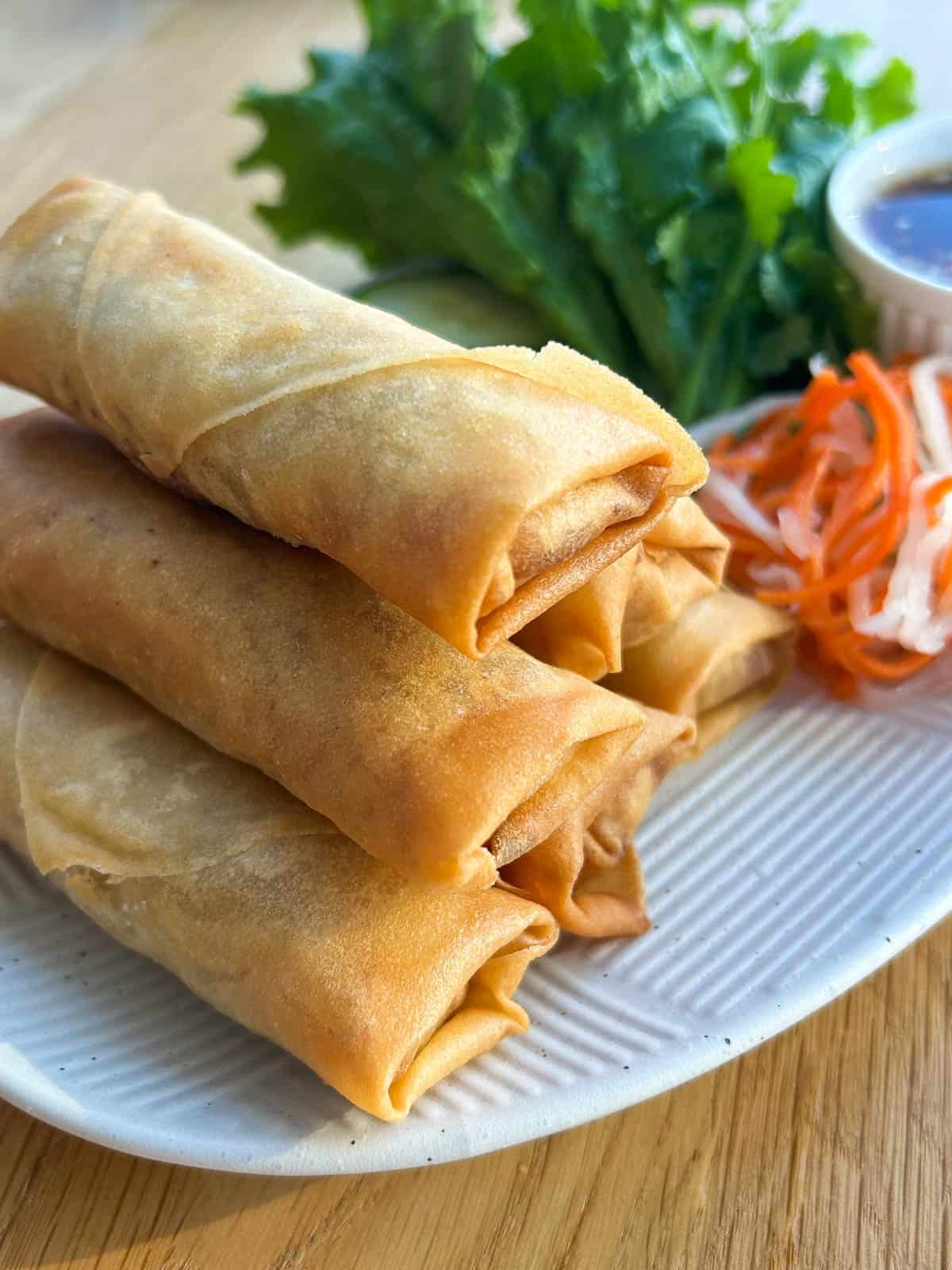
I used to loathe rolling egg rolls when I was younger because it was mundane and tedious (probably because we were rolling a hundred of them) but as an adult, I've grown to appreciate it so much more, especially when I'm doing it with my mom. Not only because she does all the chopping and minces super quickly, but because it's one of the ways we got to spend time together and I hope you get to spend time with a loved one rolling these egg rolls too! It'll definitely make the time go faster.
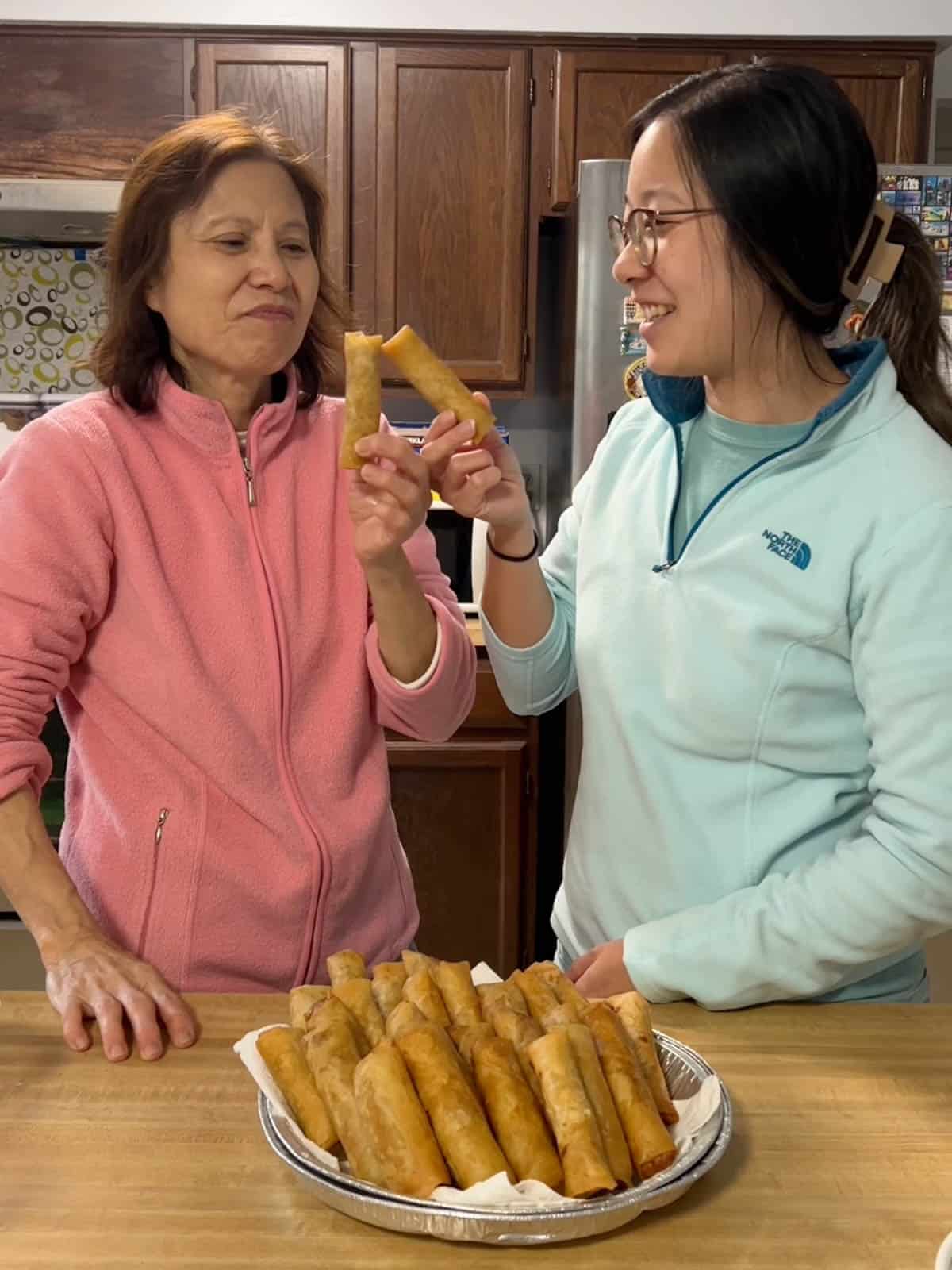
I'm not going to lie though, rolling about 25 egg rolls is a lot of work, but it's so worth it and you definitely don't have to eat them all at once. Cook some of them and par-fry the rest to freeze. That way, you've got restaurant quality crispy egg rolls whenever the craving hits (and if you're like me, the craving always hits. It's just like how people keep a stash of wontons or dumplings in their freezer. Vietnamese families do the exact same thing but with egg rolls.
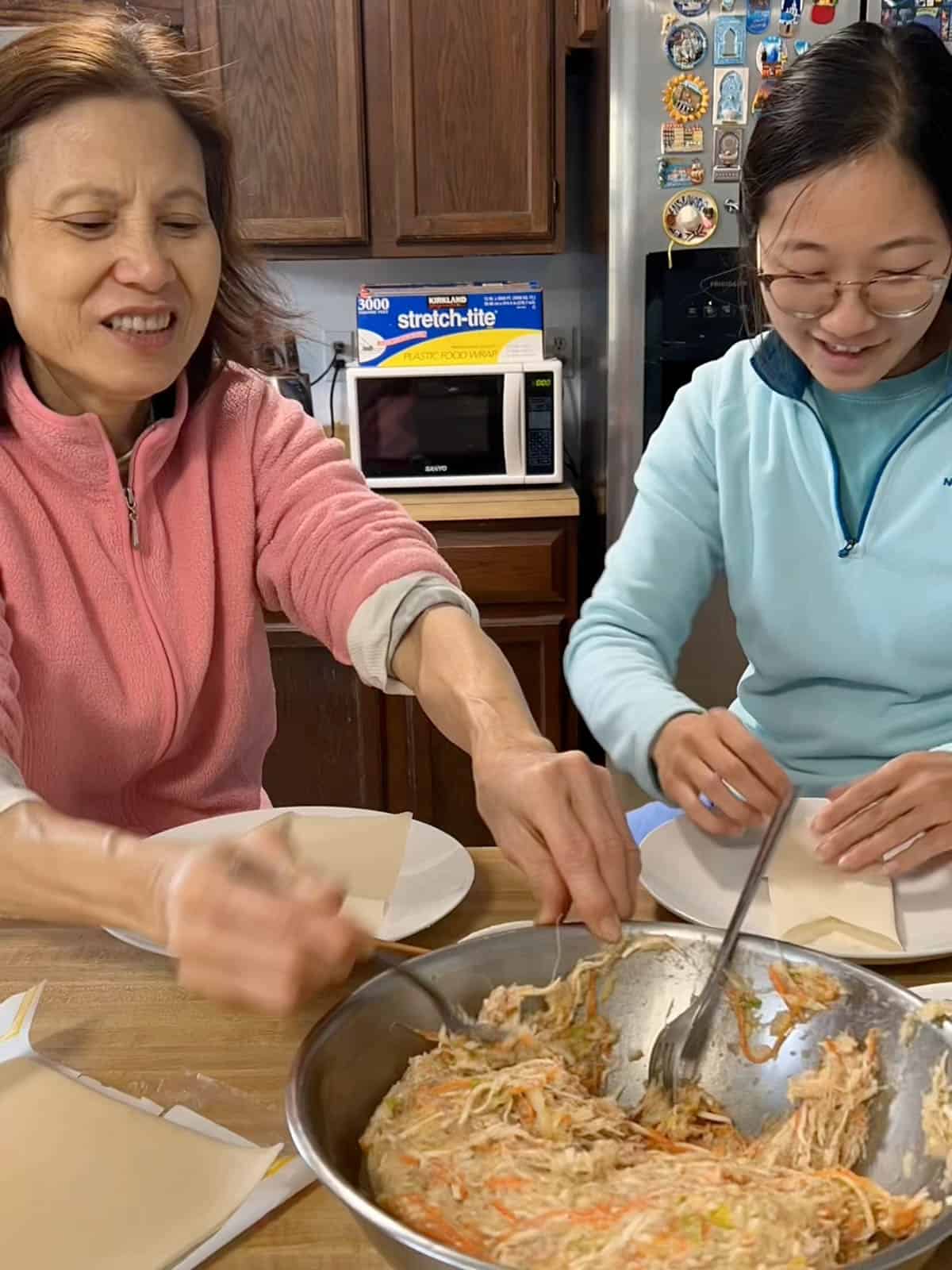
Eat them on their own dipped in my Vietnamese fish sauce (nước chấm), or tuck them into a bowl of vermicelli noodles to make my favorite Vietnamese dish, bún chả giò (rice vermicelli noodles with egg rolls). They're also so good added to a bowl of my Vietnamese lemongrass beef (bún bò xả)!
What are Vietnamese egg rolls (chả giò)?
Chả giò are Vietnamese fried egg rolls, not to be confused with Chinese egg rolls or spring rolls (gỏi cuốn) which are fresh and not fried. It's even more confusing when you discover that in Hanoi and northern parts of Vietnam, they wrap their filling in rice paper and it kind of looks like a fried fresh spring roll, which actually has a very nice chew to it! But don't even get me started on summer rolls. I'm convinced the word 'spring' got lost in translation and someone called spring rolls, 'summer rolls' by mistake, but I digress.
Every family has their own recipe with various fillings but the most common ingredients you'll find in cha gio is a mixture of ground pork, shrimp, bean thread noodles, and vegetables like wood ear mushrooms, taro, carrot, and or jicama, plus seasonings. My brother is actually allergic to seafood so while shrimp is commonly found in Vietnamese egg rolls, we never made ours with it due to his allergy and I still think it tastes just as good without it! Plus, it's one less ingredient to shop for.
While this is not a completely traditional chả giò recipe, the flavor is still pretty spot on. It's a vegetable-forward one, made with a variety of veggies that give it nice texture and flavor. I've made this recipe with ground pork, ground chicken, and super firm tofu and it worked great for all of them!
Why you'll love these Vietnamese egg rolls
- Freezer friendly - Par-fry a batch and you've got crispy egg rolls whenever you want them.
- Makes a big batch - About 25 egg rolls, which is perfect for parties, family gatherings and couch rotting days.
- Keeps you feeling light - The veggie-forward filling keeps it light so you don't feel too heavy when you consume a dozen.
- Super crispy - Salting and squeezing the veggies pulls out the extra water so the filling stays tight and the wrapper stays crisp.
- Restaurant-quality at home - Crispy homemade egg rolls that taste like your favorite Vietnamese spot.
Jump to:
- What are Vietnamese egg rolls (chả giò)?
- Why you'll love these Vietnamese egg rolls
- Ingredients
- How to make Vietnamese egg rolls
- What I learned while Making these Vietnamese egg rolls
- Substitutions and Variations
- How to store and reheat Vietnamese egg rolls
- How to enjoy Vietnamese egg rolls
- FAQ
- Other recipes to try:
- Vietnamese Egg Rolls (Restaurant-Quality Chả Giò)
Ingredients
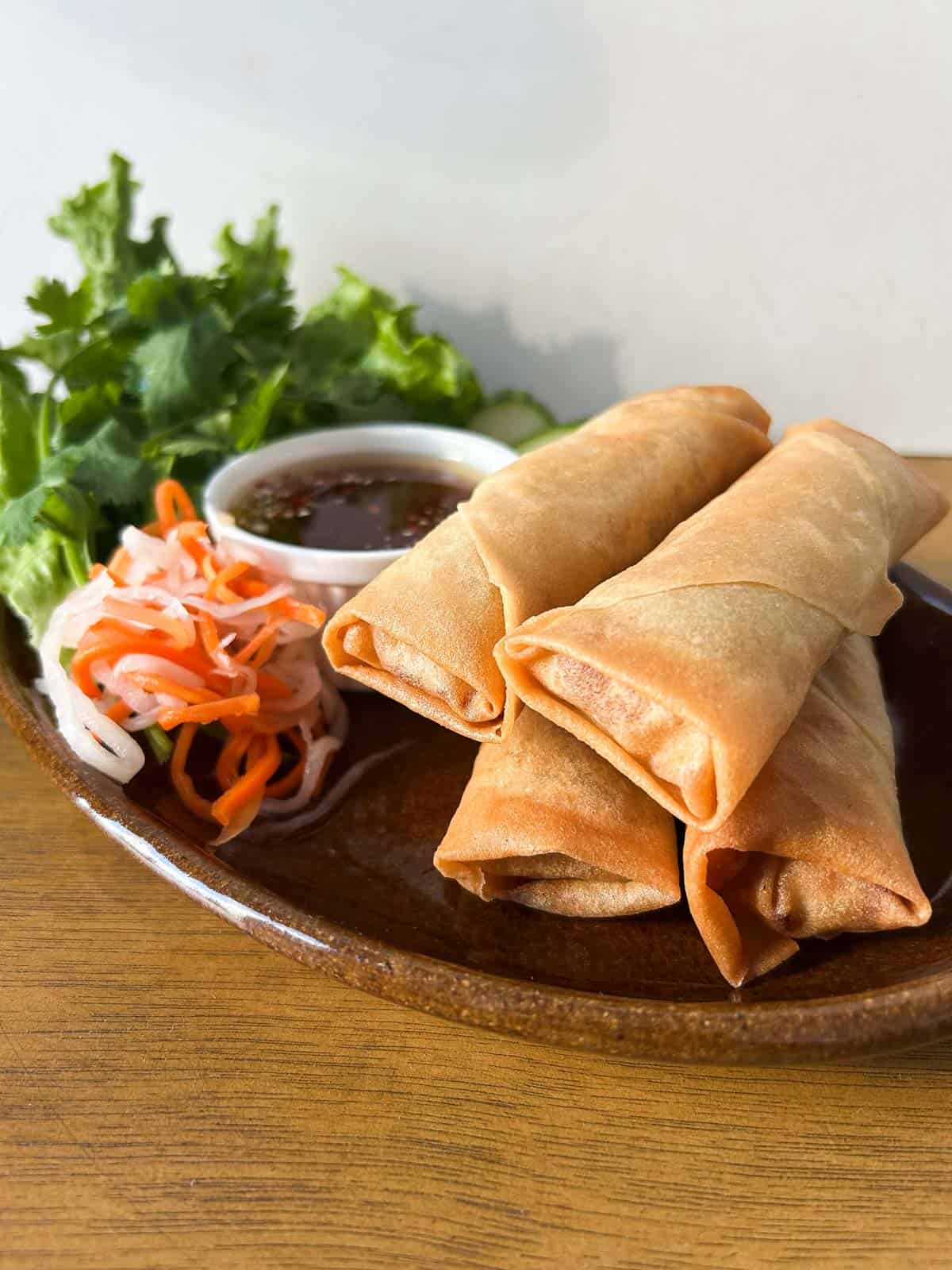
For the filling:
- Ground protein: This egg roll recipe works great with ground chicken, ground pork or super firm tofu. For ground chicken, try not to get too lean of a cut. Otherwise the filling may come out dry.
- Shallots and garlic: Minced finely for the base of the flavor.
- Taro: It cooks in the egg roll and gives the filling a nice texture.
- Cabbage: Use green cabbage for a slight crunch.
- Carrots: For color and a little sweetness.
- Jicama: Keeps the filling moist.
- Bean thread noodles: Also called fine vermicelli or bean thread vermicelli, not to be confused with rice vermicelli which are too thick. They soak up the seasoning and give the egg rolls a little chew.
- Kosher salt: For drawing the water out of the cabbage, carrots and jicama, plus seasoning the filling.
For the seasoning:
- Sugar: Balances the salt.
- Chicken bouillon: Adds that savory, umami flavor that makes these taste so good.
- Black pepper: For a little kick of heat.
For the tapioca seal:
- Tapioca flour and water: Cooked into a thick paste that glues the egg rolls shut so they don't open up while frying.
For wrapping and frying:
- Egg roll wrappers: Wei Chuan is the one we like to use because it's thin and gets super crispy when fried but any other egg roll wrapper will work.
- Neutral oil: For deep frying or par-frying. Avocado is my go-to, but any high smoke point oil will work.
See recipe card for quantities.
How to make Vietnamese egg rolls
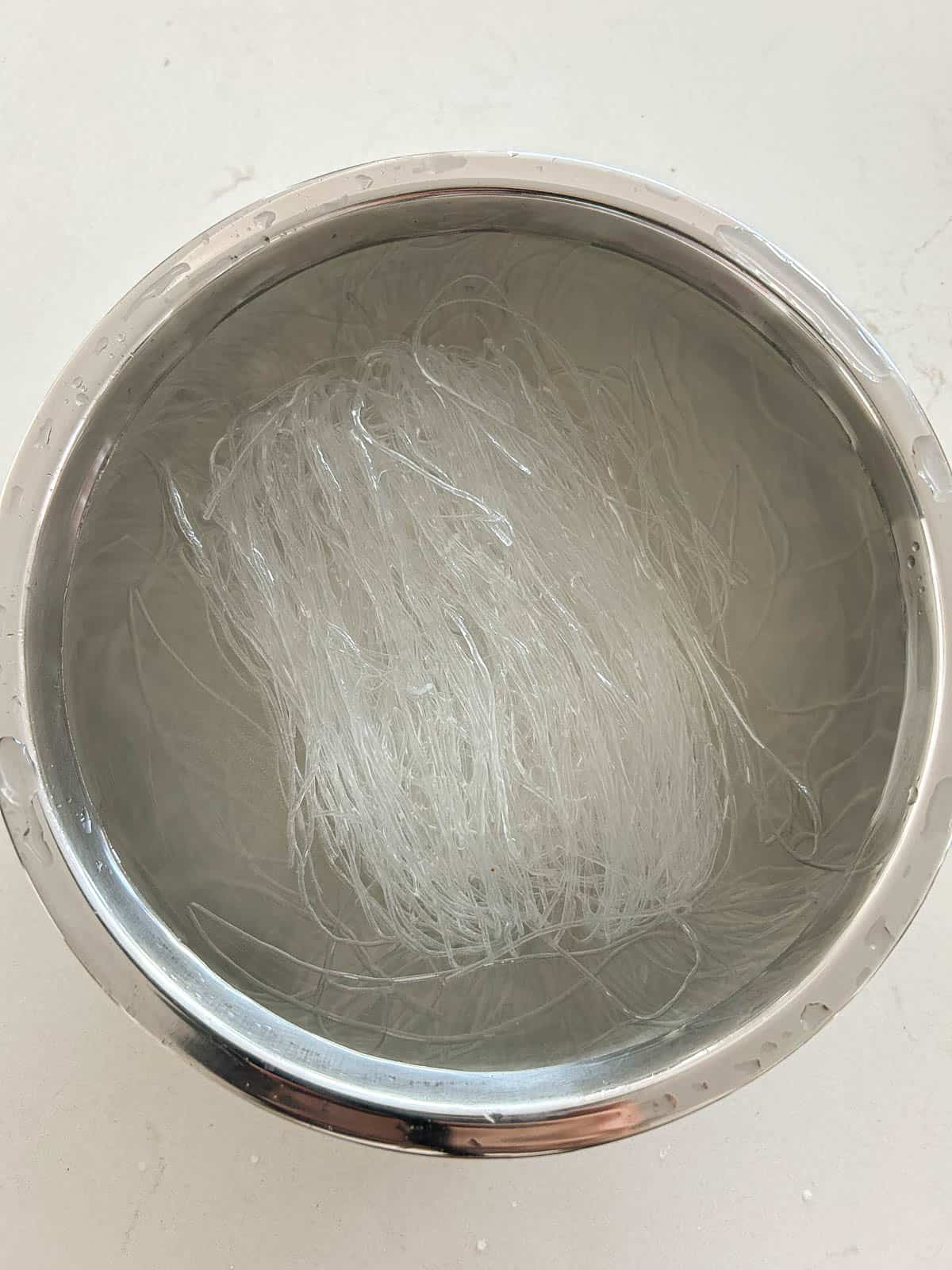
- Step 1: To a bowl of warm tap water, add the bean thread noodles. Soak for about 10 minutes, until softened, while you prep the rest of the filling.
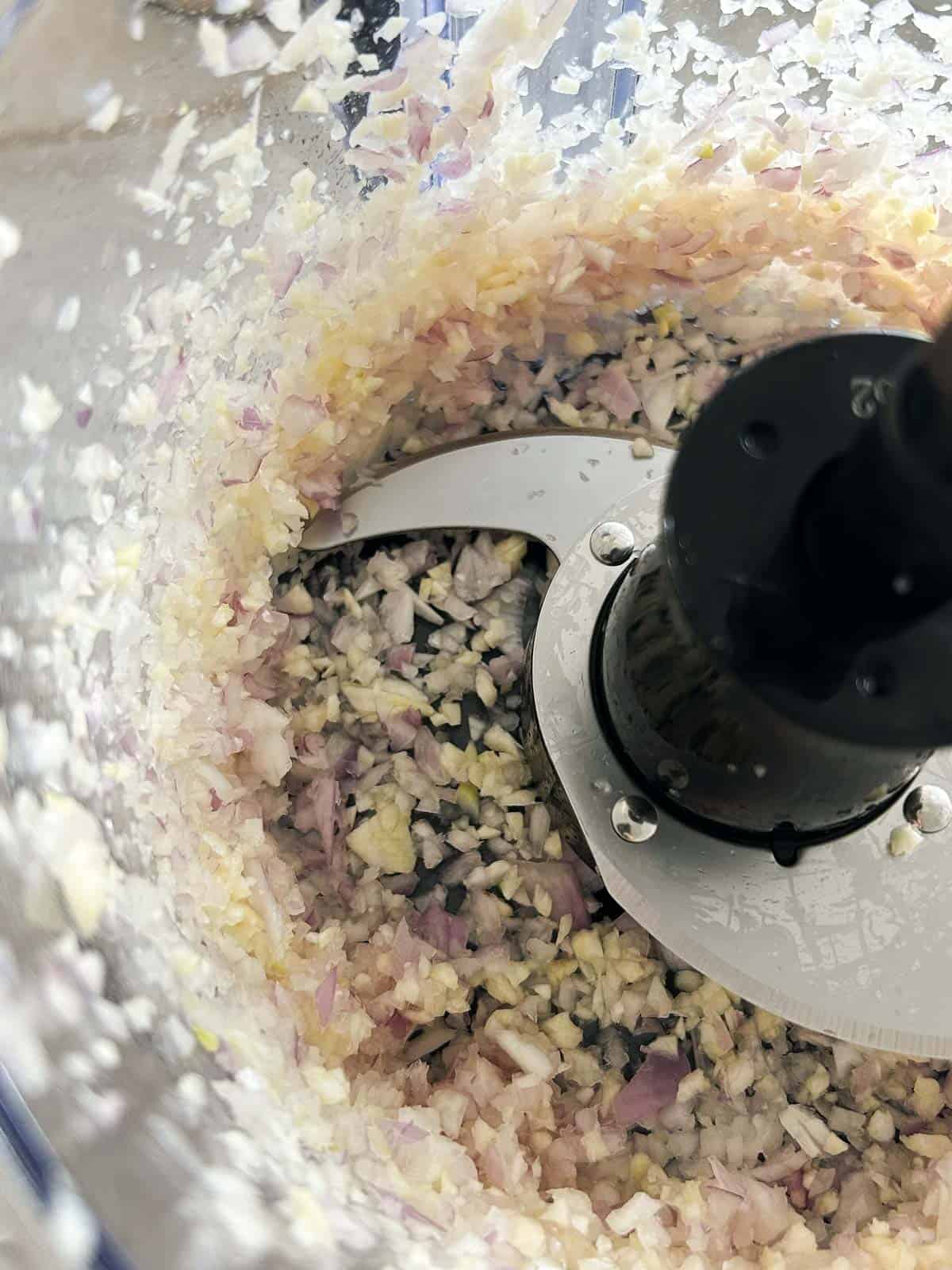
- Step 2: Mince the shallots and garlic finely, by hand or in a food processor.
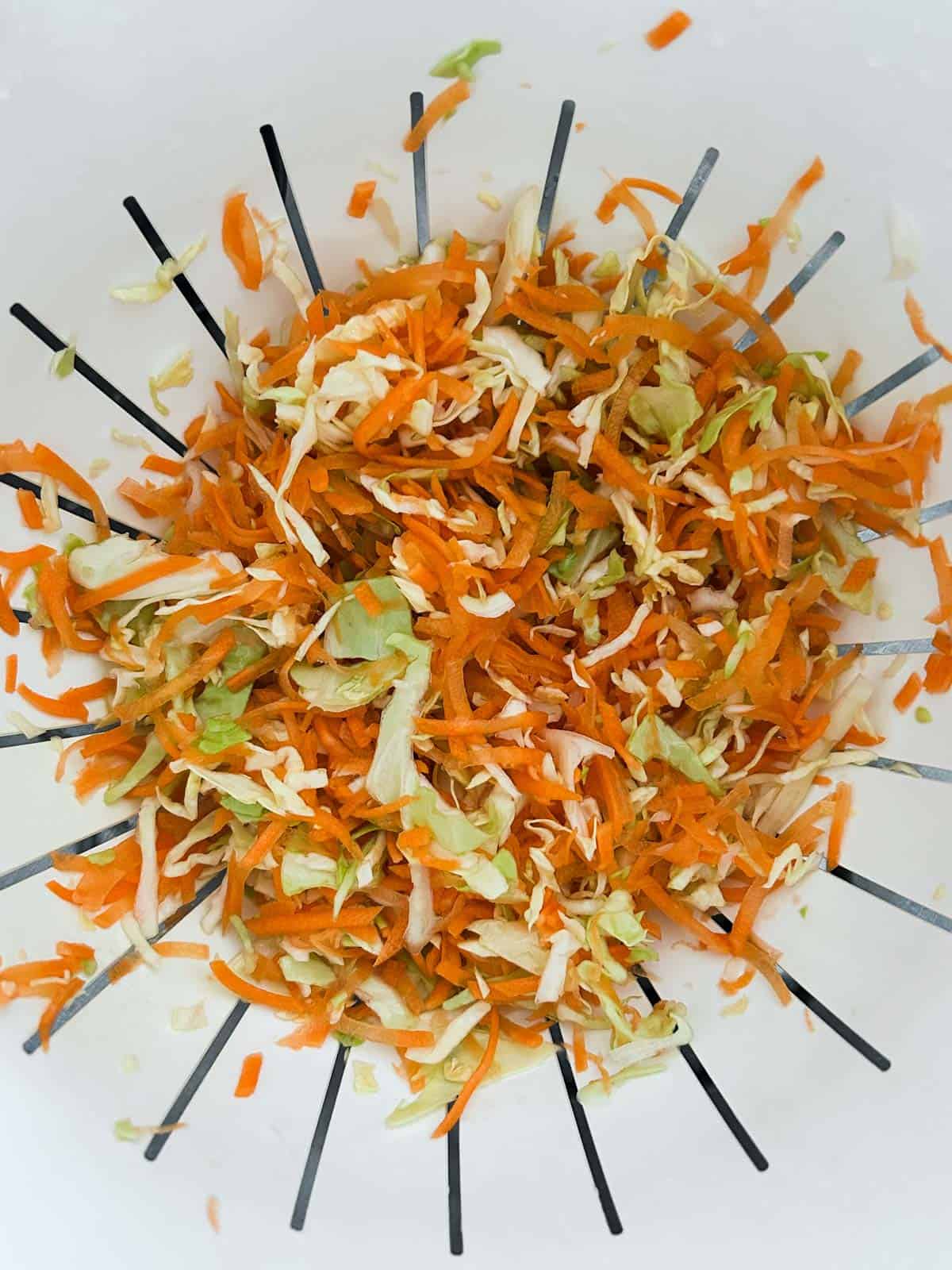
- Step 3: In a bowl, toss the shredded cabbage and carrots with 1 teaspoon of salt. Let sit for up to 10 minutes to soften.
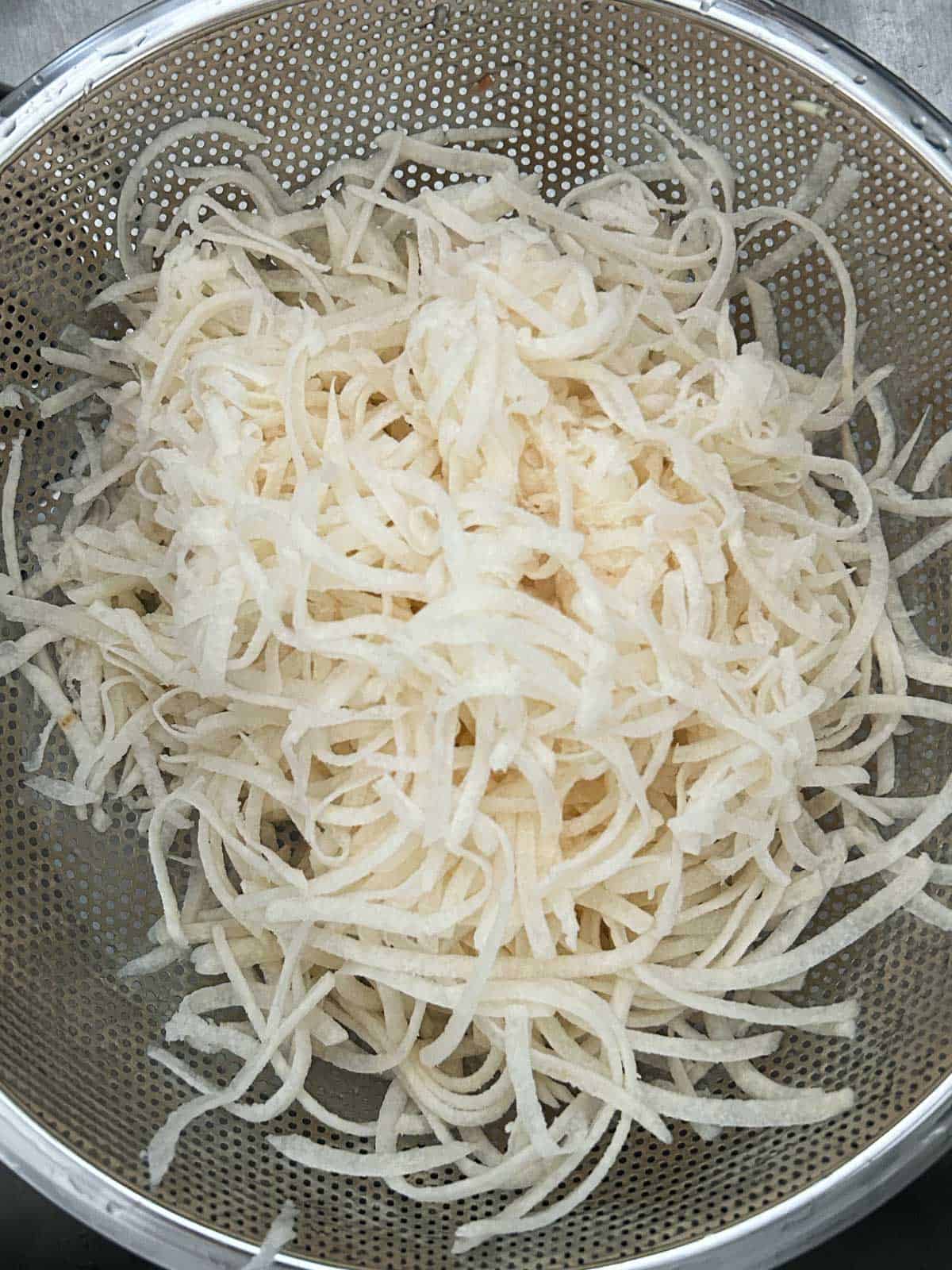
- Step 4: In a separate bowl, toss the shredded jicama with ½ teaspoon of salt and let sit for up to 10 minutes.
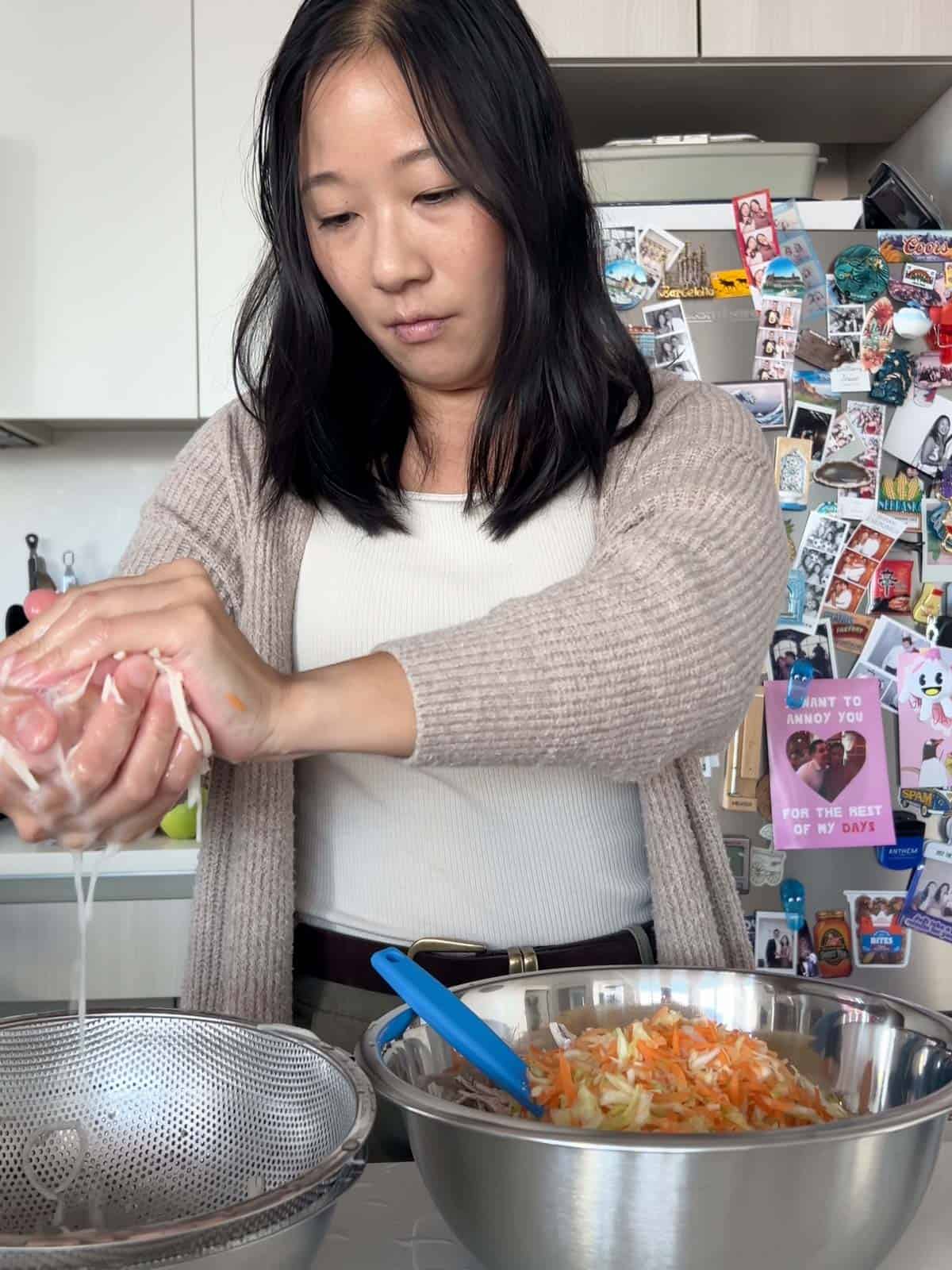
- Step 5: Rinse the cabbage and carrots, then squeeze out as much water as you can. Add it to a bowl along with the shredded taro, garlic and shallots. Squeeze out all the water from the jicama and add it to the same bowl.
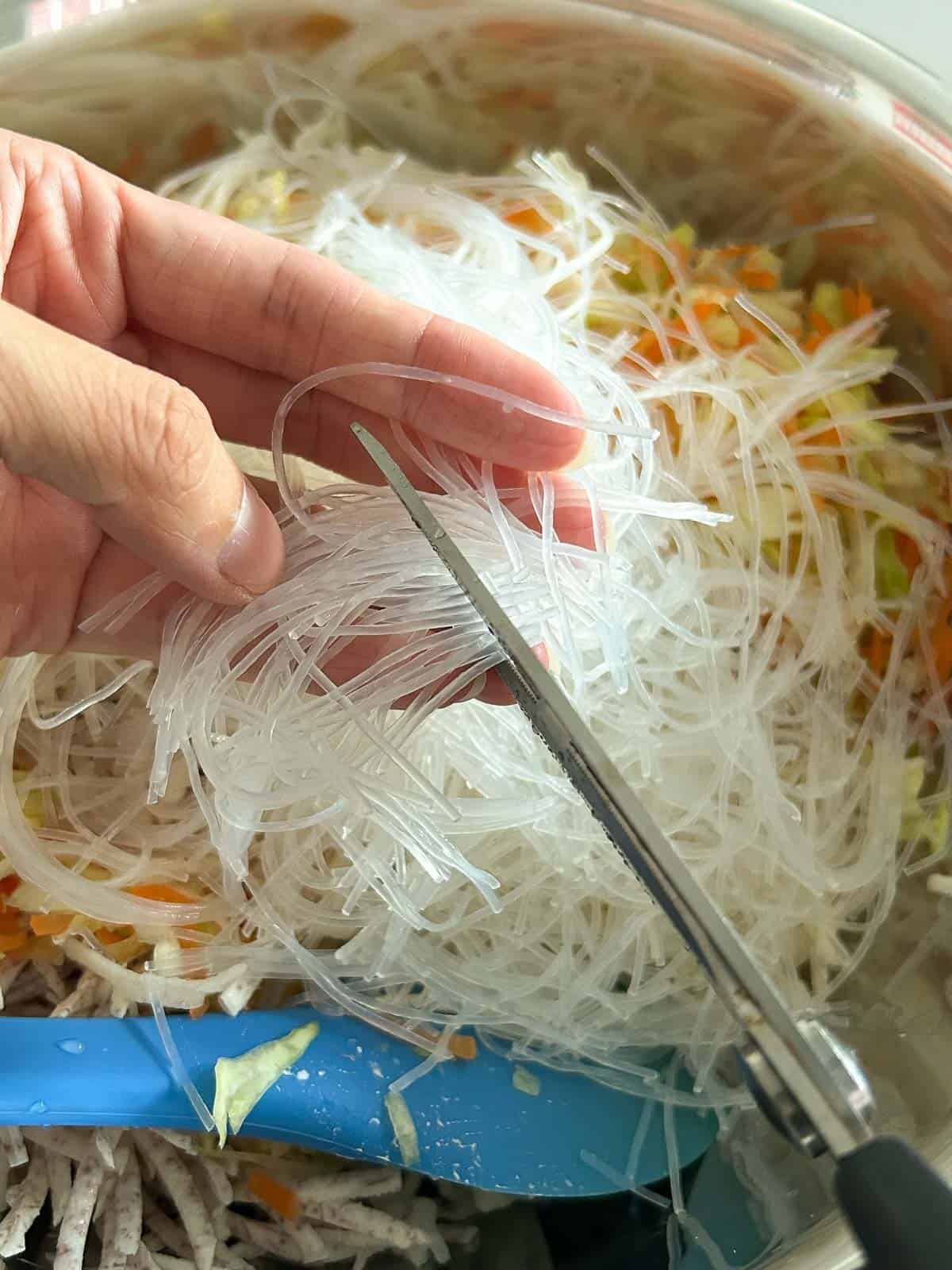
- Step 6: Drain the noodles, cut them into short pieces and add them to the bowl.
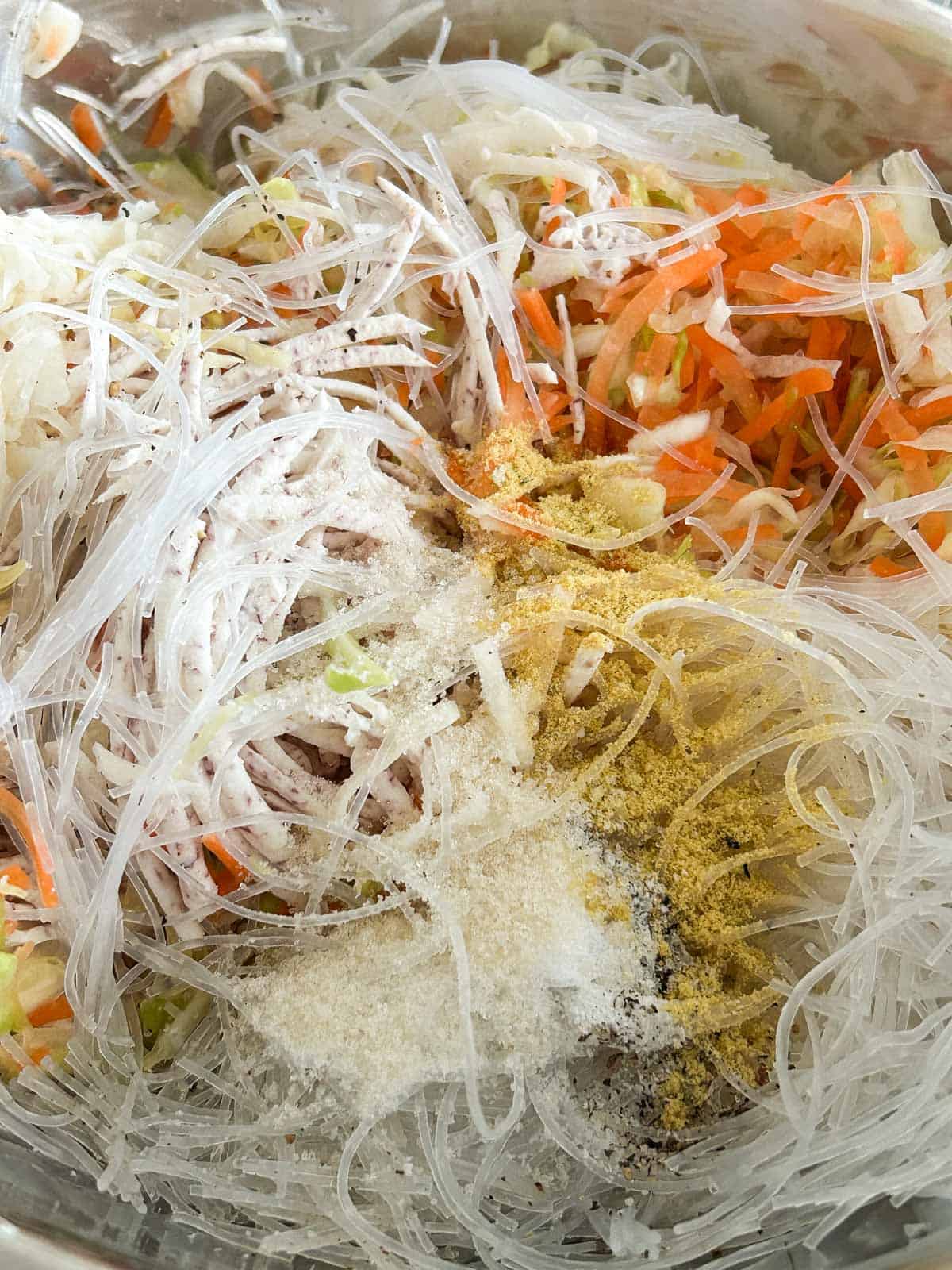
- Step 7: Add the salt, sugar, chicken bouillon and black pepper. Mix well.
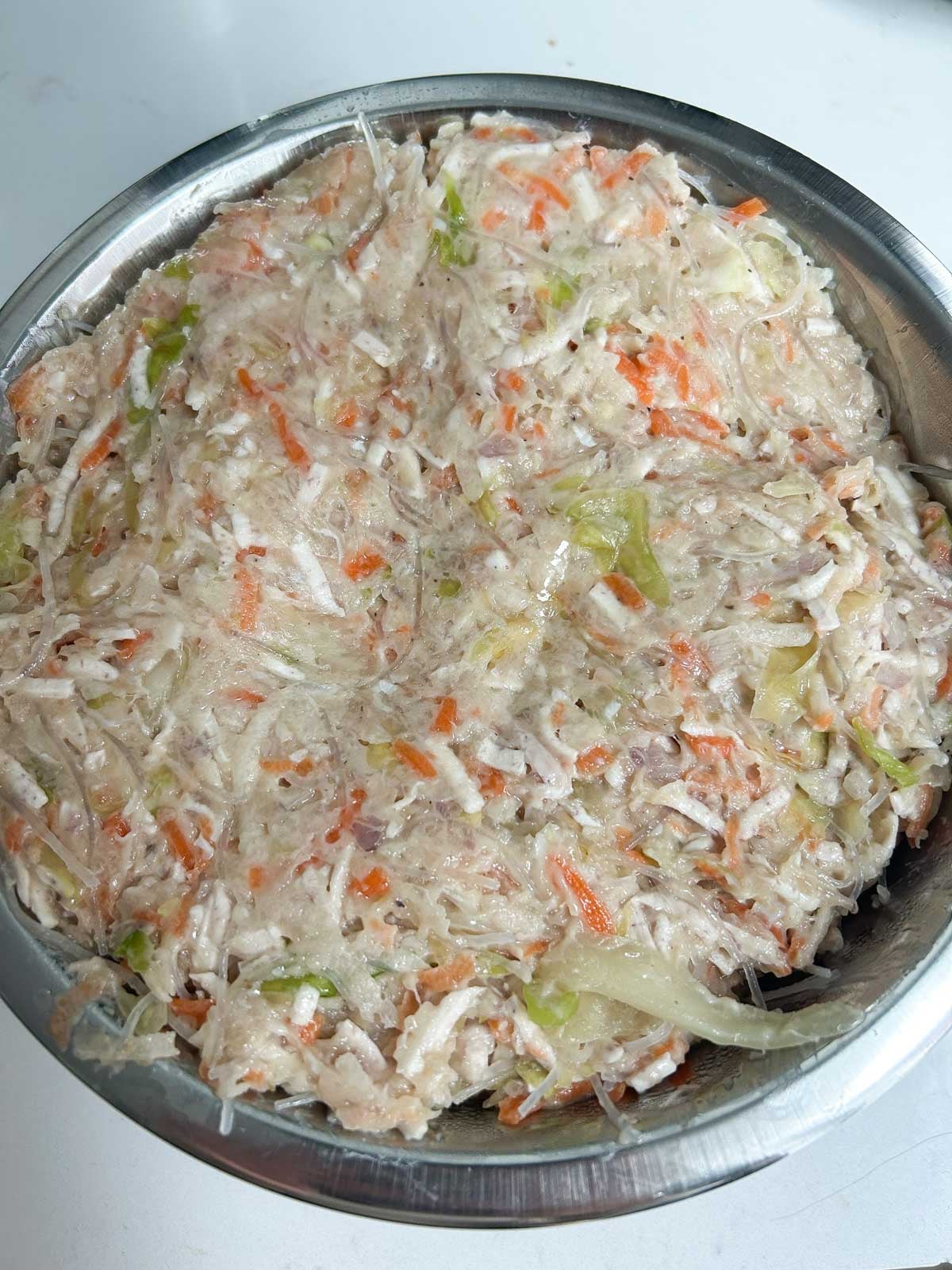
- Step 8: Add the ground chicken or pork and mix until combined, being careful not to overmix. Let it rest for 10 minutes.
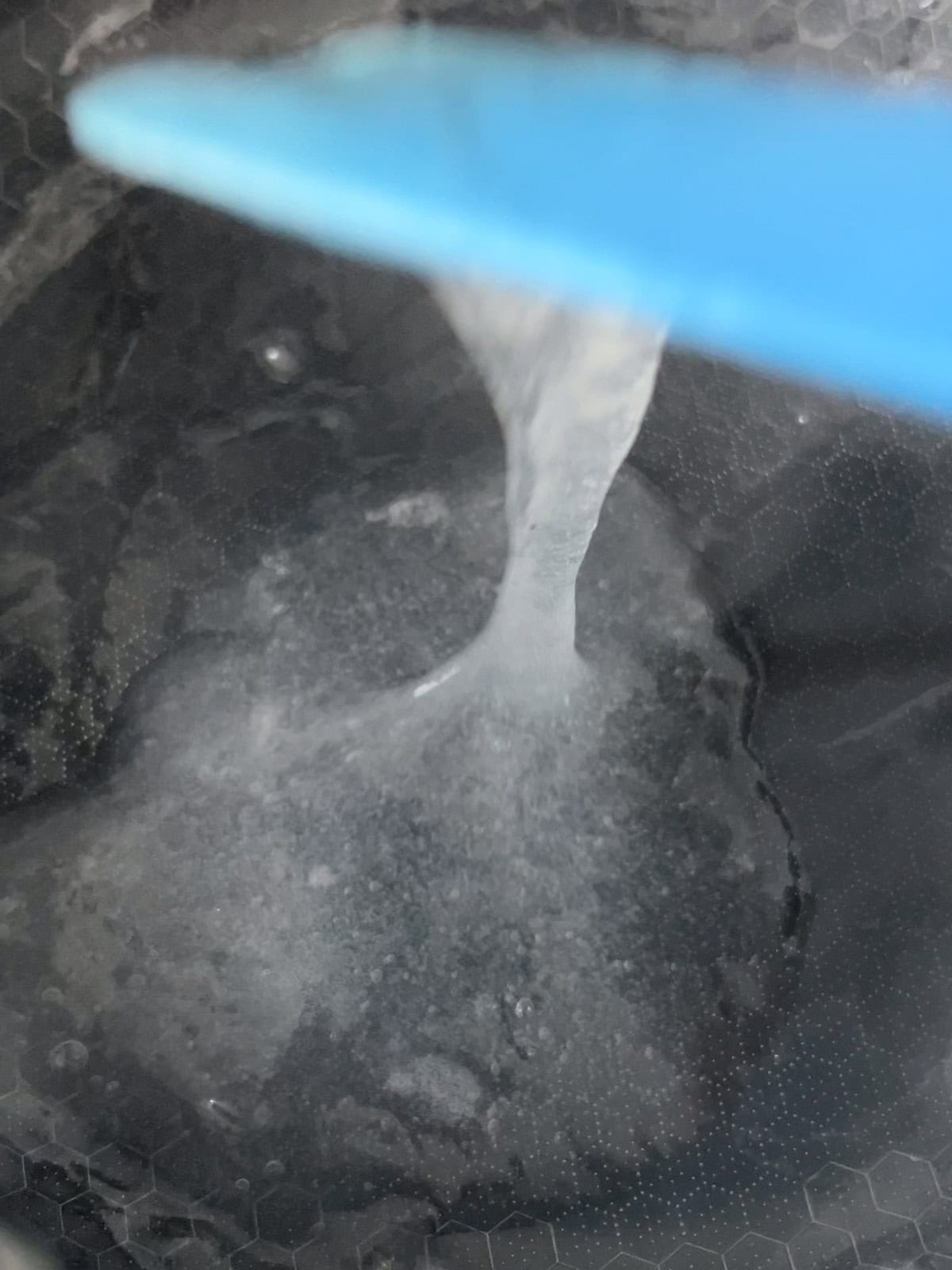
- Step 9: Make the tapioca seal. In a small pot, whisk the tapioca flour into the water. Cook over medium heat until it starts to thicken.
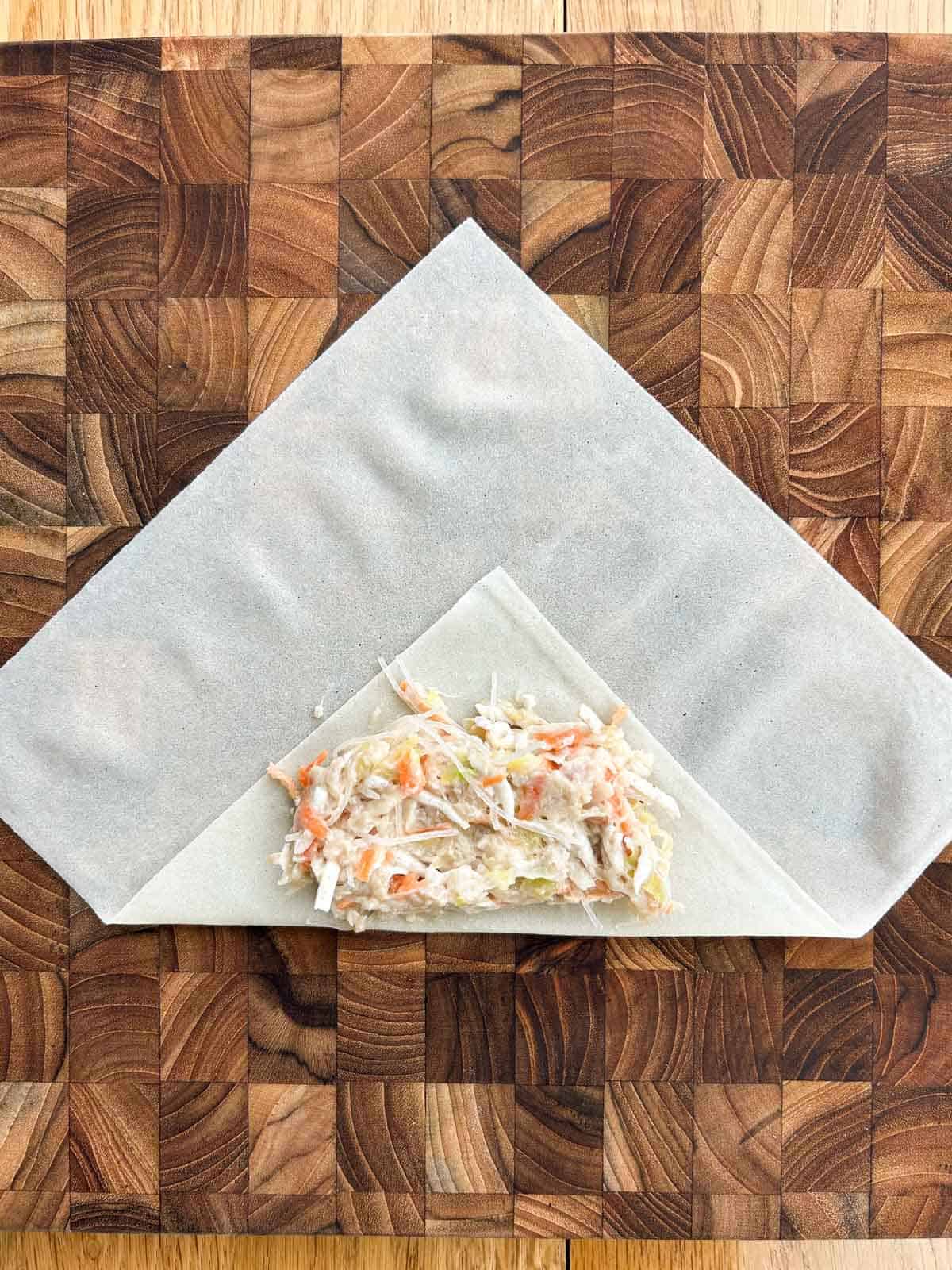
- Step 10: Lay an egg roll wrapper like a diamond, with one corner pointing toward you. Fold the bottom corner up about a third of the way and add 2 heaping tablespoons of filling on top.
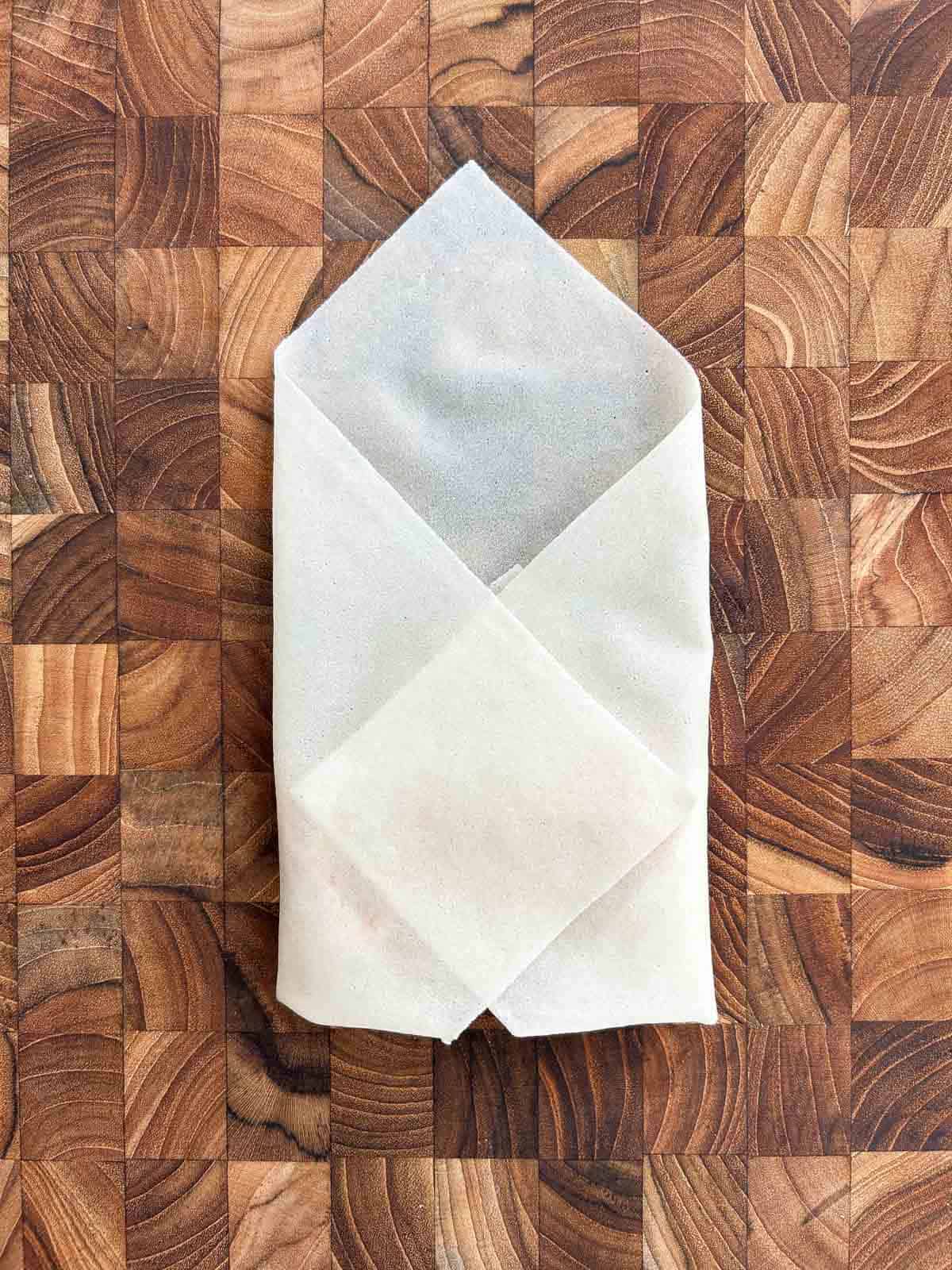
- Step 11: Fold in both sides, one over another and roll up tightly.
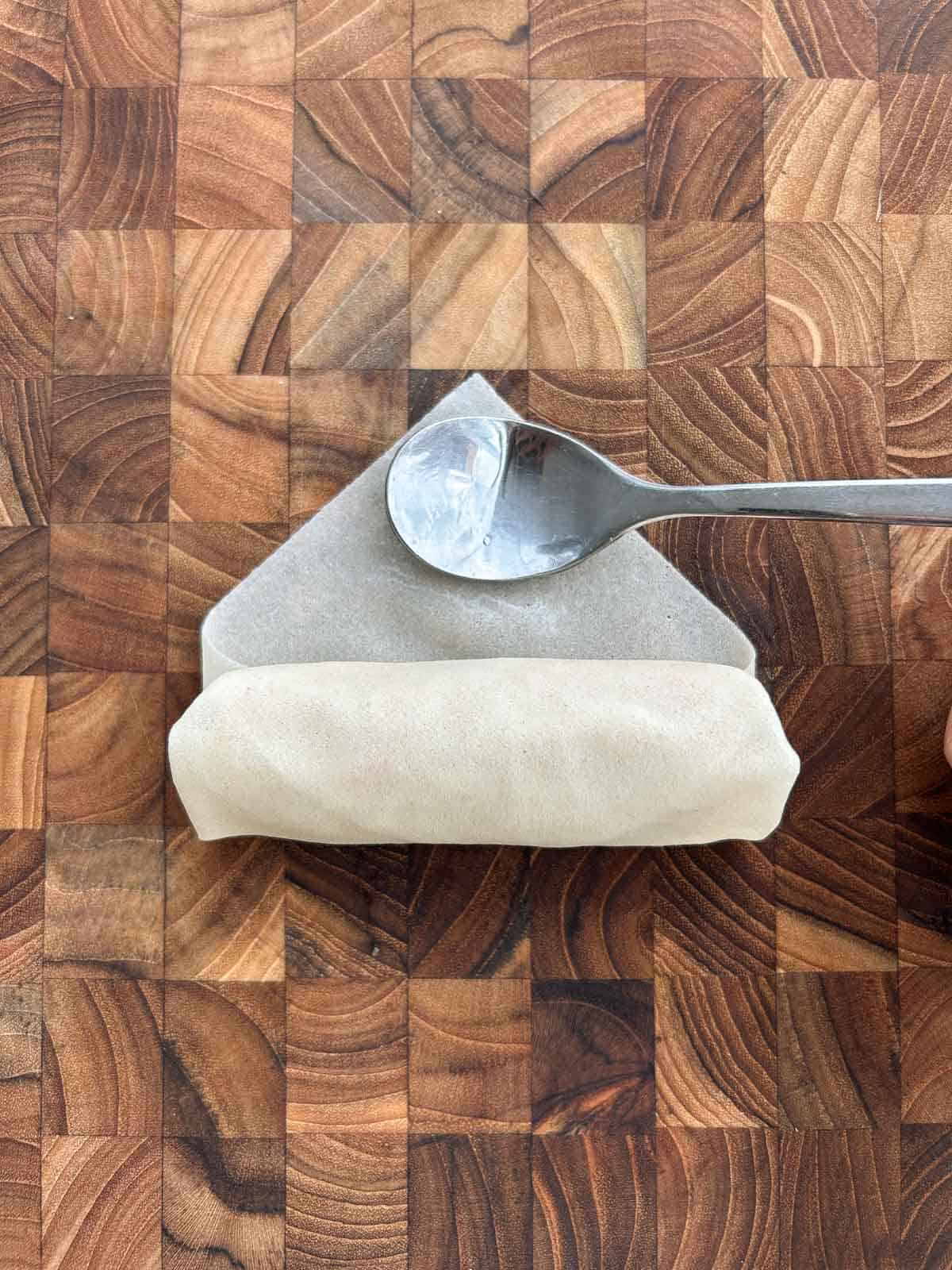
- Step 12: Brush the tapioca mixture on the top corner and roll to seal. Repeat with the remaining wrappers.
- Step 13: To cook:
- Air fryer - Air fry at 375F for 5–7 minutes, until the internal temperature reaches 165F. Note the egg rolls may not get as golden brown when air frying.
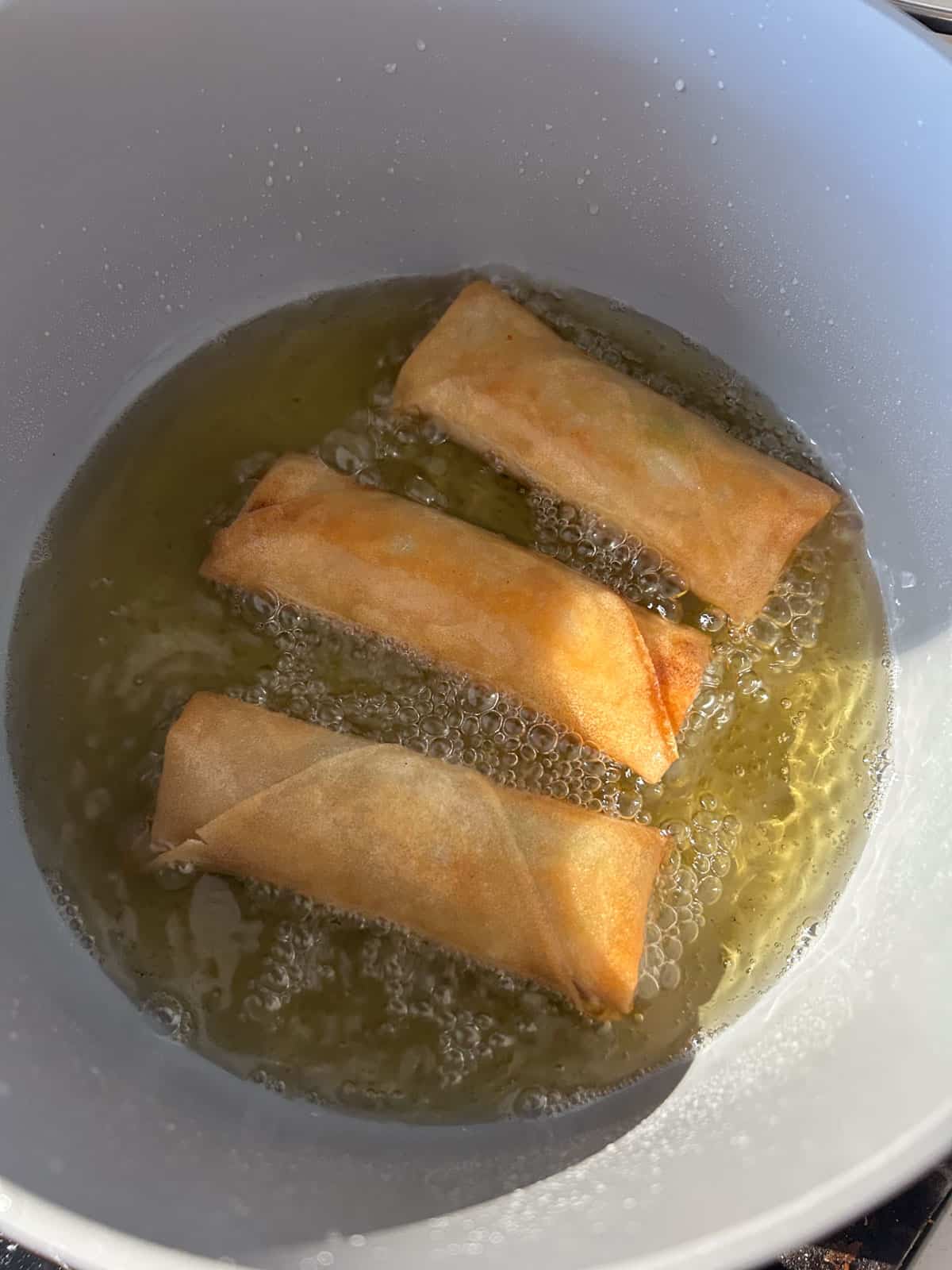
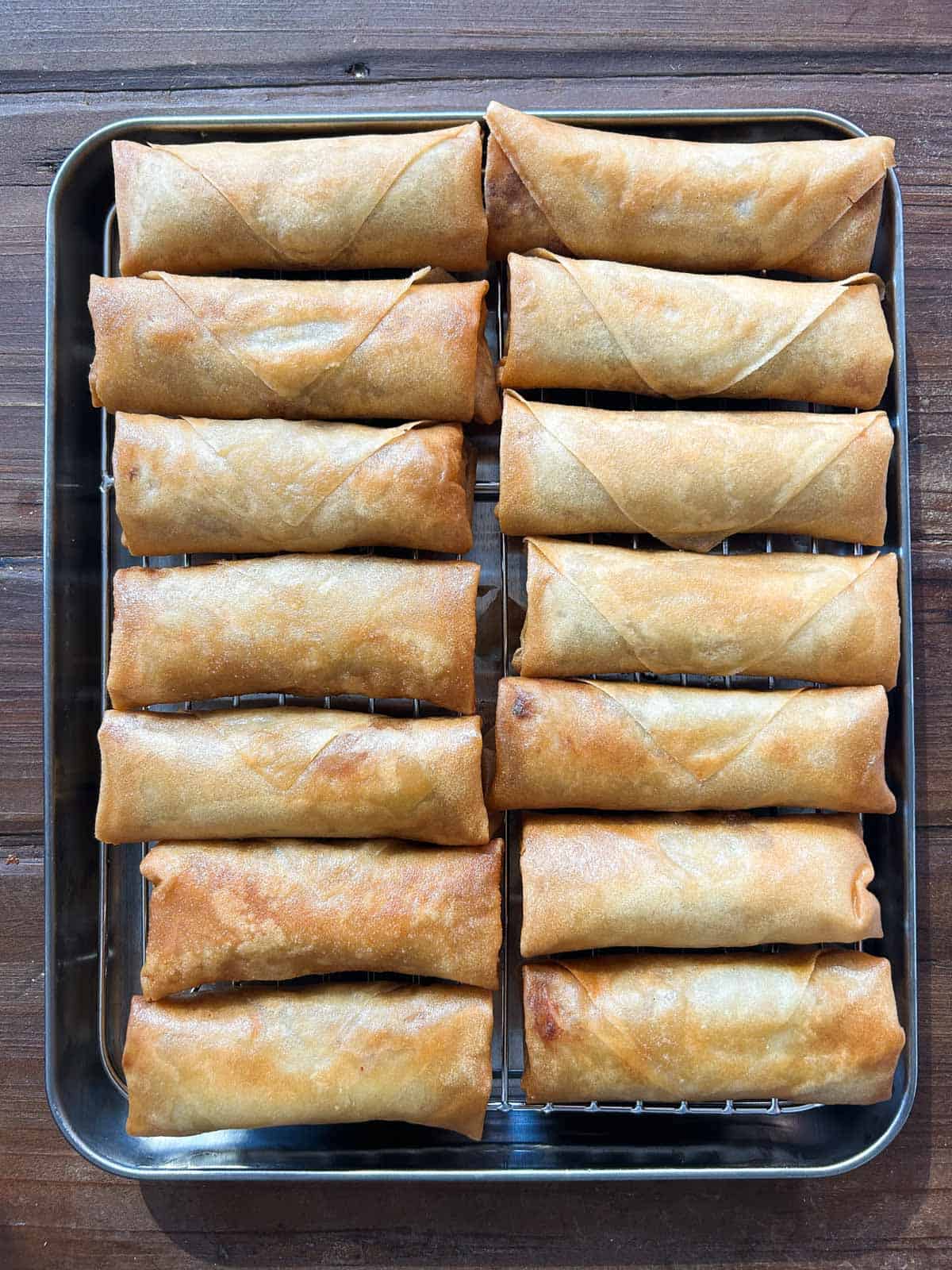
- Deep fry - Heat the oil to 350F. Fry 3–5 egg rolls at a time (depending on the size of your pot) for 4–5 minutes, until golden brown and the internal temperature reaches 165F, flipping halfway. Drain on a wire rack.
- Par-fry (to freeze) - Heat the oil to 335F. Fry for about 4 minutes total, flipping halfway at 2 minutes per side. Let cool, then freeze.
What I learned while Making these Vietnamese egg rolls
- A food processor is your best friend here. It cuts prep time in half (or even more if you're a really slow chopper/shredder.
- Mix all the ingredients together before adding in the protein. There's a higher chance of over mixing the protein when you add it at the same time as everything else, which will cause the filling to become tough. Combine all of the vegetables and seasonings thoroughly before mixing in your protein.
- Always cook a test batch of filling before rolling. Fry up a little bit of filling in a pan or heat it up in the microwave to make sure there is enough seasoning. I usually serve this with my homemade fish sauce, so I find that under seasoning it slightly helps it to not be too salty, but season to your own preferences.
- Aim for 335-350F for an even fry. The egg rolls will begin to brown too quickly if it's any higher.
- Squeeze out excess moisture like you mean it. Really use some force when squeezing out the moisture in the vegetables. Moisture will cause the egg rolls to become soggy and no one wants soggy egg rolls!
- Don't overpack the egg rolls. This can cause the wrapper to rip and the filling to spill out when frying.
Substitutions and Variations
- Protein - This recipe works great with ground chicken, ground pork, and even super firm tofu. You can also do a 50/50 mix of shrimp and ground pork for a more traditional take. I haven't tested these with only shrimp yet though, but let me know in the comments if you try it!
- Vegetarian - Swap the chicken bouillon for mushroom or vegetable bouillon and use tofu instead of ground chicken.
- Vegetable swaps - Feel free to omit any of the vegetables or swap out one for more of another! Cook a little of the filling before rolling to make sure you like the taste of it.
- Tapioca seal - No tapioca flour? Swap with all purpose flour. An egg wash may work if you don't have either, but it may not stick as well.
How to store and reheat Vietnamese egg rolls
Fridge: Store cooked egg rolls in an airtight container in the fridge.
Freezer: Par-fry the egg rolls, let them cool completely, then freeze them in a single layer on a sheet pan before moving them to a freezer bag. They'll keep for up to 6 months.
Reheat: Reheat in the air fryer at 350F or oven so the wrapper crisps back up.
How to enjoy Vietnamese egg rolls
- On their own - Dip them in my Vietnamese fish sauce (nước chấm).
- Lettuce wraps - Wrap them in lettuce with fresh herbs.
- Bún chả giò - My favorite way! A bowl of rice vermicelli noodles with lettuce, herbs and pickled carrots and daikon, topped with sliced egg rolls and plenty of nước chấm.
- With lemongrass beef - Add them to a bowl of my Vietnamese lemongrass beef for the ultimate vermicelli bowl.
FAQ
Yes! Par-fry them at 335°F for about 4 minutes, let them cool and freeze. Then finish cooking them whenever you're ready.
Yes. Air fry at 375°F for 5–7 minutes, until the internal temperature reaches 165°F.
Usually it's due to too much water in the filling. Salting the cabbage, carrots and jicama and then squeezing out the water keeps the filling from steaming the wrapper, so don't skip this step!
Egg rolls tend to have a different filling than spring rolls and are fried until crispy. Spring rolls are usually fresh rolls, like Vietnamese gỏi cuốn, wrapped in rice paper and served cold. Fried spring rolls on the other hand, usually have a vegetable-forward filling but are deep fried like egg rolls.
You can use all purpose flour if you don't have tapioca starch.
Other recipes to try:
- vietnamese caramelized ground beef (ground beef thịt kho)
- vietnamese yakitori (sticky fish sauce chicken skewers)
- bánh khọt (crispy vietnamese mini pancakes)
- vietnamese caramelized pork belly (thịt ba rọi xào mặn)
Vietnamese Egg Rolls (Restaurant-Quality Chả Giò)
Equipment
Ingredients
Filling
- 1 lb ground chicken or pork
- 2 shallots minced finely
- 8 garlic cloves minced finely
- 2 cups taro shredded (about 250 grams), packed
- 1½ cups cabbage shredded (about 185g), packed
- 2 carrots shredded (about 1 cup packed or 130 grams)
- 6.5 oz jicama shredded (about 185 grams)
- 1.7 oz bean thread noodles 1 small bundle (50 grams)
- 1 teaspoon kosher salt for the cabbage and carrots
- ½ teaspoon kosher salt for the jicama
Seasoning
- 2 teaspoons kosher salt
- 1½ teaspoons sugar
- 1 teaspoon chicken bouillon
- ¼ teaspoon black pepper
Tapioca seal
- ½ tablespoon tapioca flour
- ⅓ cup water
For wrapping and frying
- 25 egg roll wrappers
- neutral oil for deep frying or par-frying
Instructions
Prep the filling
- To a bowl of warm tap water, add the bean thread noodles. Soak for about 10 minutes, until softened, while you prep the rest of the filling.1.7 oz bean thread noodles
- Mince the shallots and garlic finely, by hand or in a food processor.2 shallots, 8 garlic cloves
- In a bowl, toss the cabbage and carrots with 1 teaspoon of salt. Let sit for up to 10 minutes to soften.1½ cups cabbage, 2 carrots, 1 teaspoon kosher salt
- In a separate bowl, toss the jicama with ½ teaspoon of salt and let sit for up to 10 minutes.½ teaspoon kosher salt, 6.5 oz jicama
- Rinse the cabbage and carrots, then squeeze out as much water as you can. Add them to a bowl along with the shredded taro, garlic and shallots. Squeeze out all the water from the jicama and add it to the same bowl.2 cups taro
- Drain the noodles, cut them into short pieces and add them to the bowl.
- Add the salt, sugar, chicken bouillon and black pepper. Mix well.2 teaspoons kosher salt, 1½ teaspoons sugar, 1 teaspoon chicken bouillon, ¼ teaspoon black pepper
- Add the ground chicken or pork and mix until combined, being careful not to overmix. Let it rest for 10 minutes.
Wrap the egg rolls
- Make the tapioca seal. In a small pot, whisk the tapioca flour into the water. Cook over medium heat until it starts to thicken.⅓ cup water, ½ tablespoon tapioca flour
- Lay an egg roll wrapper like a diamond, with one corner pointing toward you. Fold the bottom corner up about a third of the way and add 2 heaping tablespoons of filling on top.25 egg roll wrappers
- Fold in both sides, one over the other and roll up tightly.
- Brush the tapioca mixture on the top corner and roll to seal. Repeat with the remaining wrappers.
Cook the egg rolls
- Air fryer - Air fry at 375°F for 5–7 minutes, until the internal temperature reaches 165°F. Note the egg rolls may not get as golden brown when air frying.
- Deep fry - Heat the oil to 350°F. Fry 3–5 egg rolls at a time (depending on the size of your pot) for 4–5 minutes, until golden brown and the internal temperature reaches 165°F, flipping halfway. Drain on a wire rack.
- Par-fry (to freeze) - Heat the oil to 335°F. Fry for about 4 minutes total, flipping halfway at 2 minutes per side. Let cool, then freeze.
Notes
- Use a food processor - It cuts the prep time in half.
- Mix before adding the protein - Combine the vegetables and seasonings first, then gently mix in the protein so the filling doesn't get tough.
- Cook a test batch - Fry or microwave a little filling to check the seasoning. I under-season slightly since I serve these with nước chấm.
- Fry at 335–350°F - Any hotter and the egg rolls brown too quickly.
- Squeeze out the moisture - Really squeeze the vegetables so the egg rolls don't get soggy.
- Don't overpack - Overfilled egg rolls can rip and spill when frying.
- Protein - Ground chicken, ground pork or super firm tofu all work, or do a 50/50 mix of shrimp and ground pork.
- Vegetarian - Swap the chicken bouillon for mushroom or vegetable bouillon and use tofu.
- Tapioca seal - All-purpose flour works as a swap. An egg wash may work too, but it may not stick as well.
- Storage - Store cooked egg rolls in an airtight container in the fridge for up to 4 days. Freeze par-fried egg rolls in a single layer, then move them to a freezer bag for up to 6 months. Reheat in the air fryer or oven.



Leave a Reply