
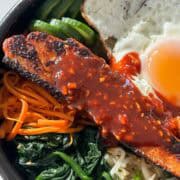
Saucy, savory, and packed with flavor! This gochujang salmon bibimbap bowl is going to be your new weeknight favorite! This bowl is loaded with veggies and protein that will satisfy your Korean food cravings at home. It has been my go-to for 'omega-3 January' and I hope it'll be yours too!
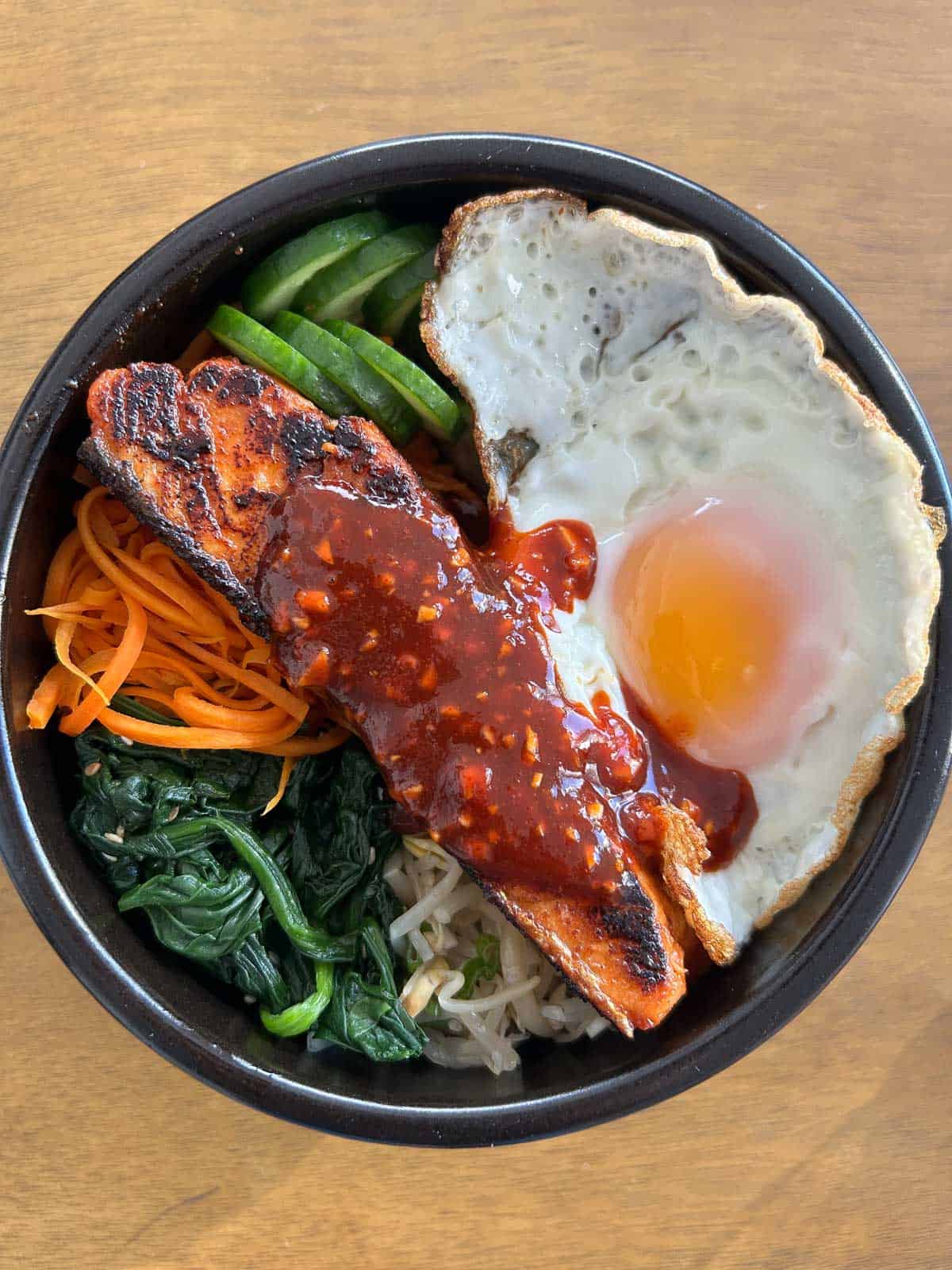
This gochujang salmon bibimbap bowl takes the classic Korean bibimbap bowl and turns it into a pescatarian friendly and omega-3 packed meal! It's a great alternative to the traditional beef and pork proteins in bibimbap and it's just as good, if not better.
Not a fan of salmon? Give my lemongrass beef bowl a try!
What is gochujang?
Gochujang is a staple in Korean cooking! It is a sticky paste commonly made from fermented red chili peppers, glutinous rice, and soybeans. The fermentation process gives it an incredibly complex flavor profile that's spicy, sweet, and deeply savory all at the same time. Gochujang is commonly mixed with other ingredients to make a marinade or sauce, so while you can eat it straight out of the tub, I'd highly recommend mixing it like I do in this recipe!
Why you'll love this gochujang salmon bibimbap bowl
- Meal prep friendly - Make the components ahead of time and assemble when you're ready to eat!
- Balanced and nutritious meal - Rich in fiber, vitamins, and protein from the various veggies, salmon, egg and rice!
- Customizable - Use whatever vegetables you like or make this a 'clean out the fridge' kind of meal.
- High in protein - 45+ grams of protein per serving to get you through your day.
Jump to:
Ingredients
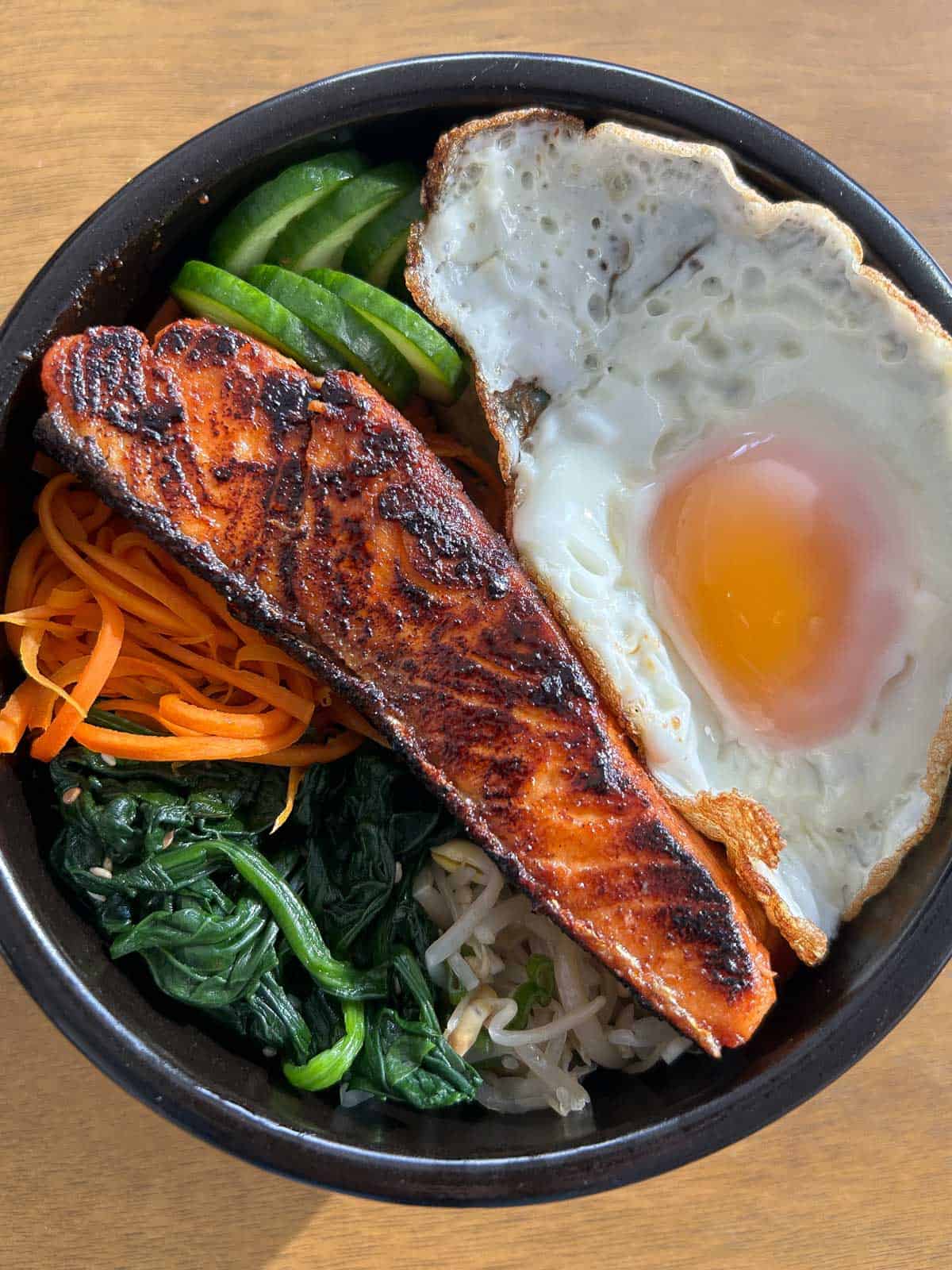
Gochujang salmon marinade and sauce:
- Salmon: 4oz salmon portions work great here.
- Soy sauce: Low sodium is best here!
- Garlic cloves: Freshly minced garlic is always best for more aroma.
- Gochujang: This is the star of the show! Find it in the shelf stable sauce aisle at your local Asian supermarket, the Asian aisle at non-Asian supermarkets or on Amazon!
- Honey: Sweetness to balance out the spice.
- Rice vinegar: Adds a little touch of acidity.
Spinach:
- Spinach: Any spinach works great! I used Korean spinach but Chinese spinach also works. Cut off the thicker fibrous parts of the stem for best texture. Regular spinach or baby spinach works too.
- Salt: Season to taste.
- Sesame oil: I used toasted sesame oil for a nuttier flavor.
- Sesame seeds: For a nutty texture.
Carrots:
- Carrots: Shredded or julienned carrot adds a nice texture to the bibimbap bowl.
- Salt: Season to taste.
Soybean sprouts:
- Soybean sprouts: Use fresh and crunchy soybean sprouts.
- Sesame oil: Adds nuttiness and brings all the flavors together.
- Salt: Season to taste.
- Garlic cloves: Use fresh garlic!
- Scallions: Use only the green part for a little onion kick that isn't too harsh.
- Black pepper: Just a little bit of freshly cracked black pepper adds a nice peppery flavor without being overpowering.
To serve:
- Cooked Korean rice
- Cucumbers, sliced
- Eggs, fried
See recipe card for quantities.
How to make a gochujang salmon bibimbap bowl
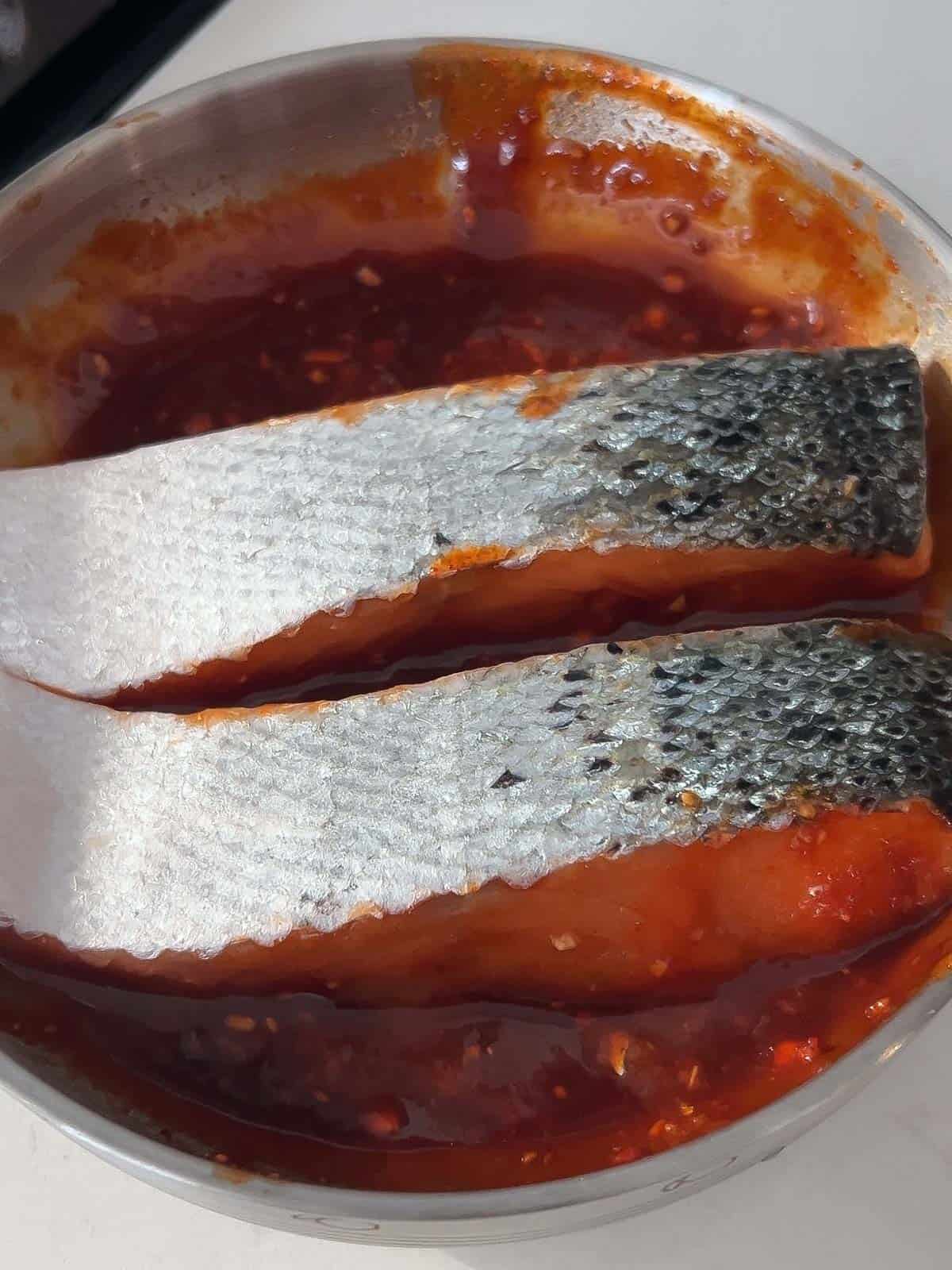
Prepare the salmon:
- Step 1: In a small bowl, mix together gochujang, minced garlic, honey, soy sauce, and rice vinegar until smooth. Reserve half of the marinade in a separate bowl and set aside for serving.
- Step 2: Place salmon filets in a shallow dish and coat with the remaining marinade. Let sit for 15 minutes while you prepare the vegetables.
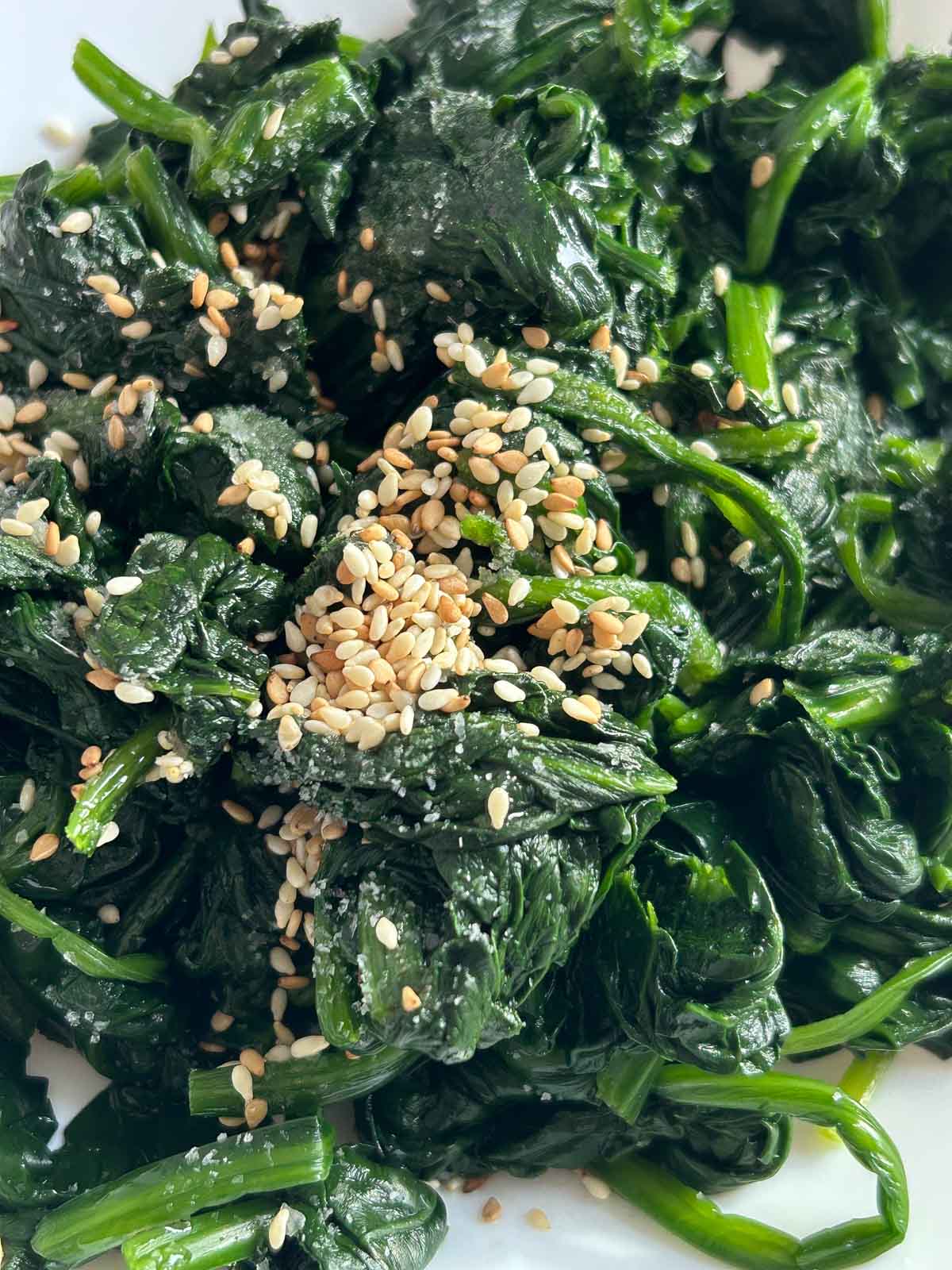
Prepare the spinach:
- Step 3: Bring a pot of water to a boil. Add spinach and blanch for 1-2 minutes until just wilted. Drain and rinse under cold water. Squeeze out excess water thoroughly.
- Step 4: Transfer to a bowl and toss with sesame oil, salt, and sesame seeds. Set aside.
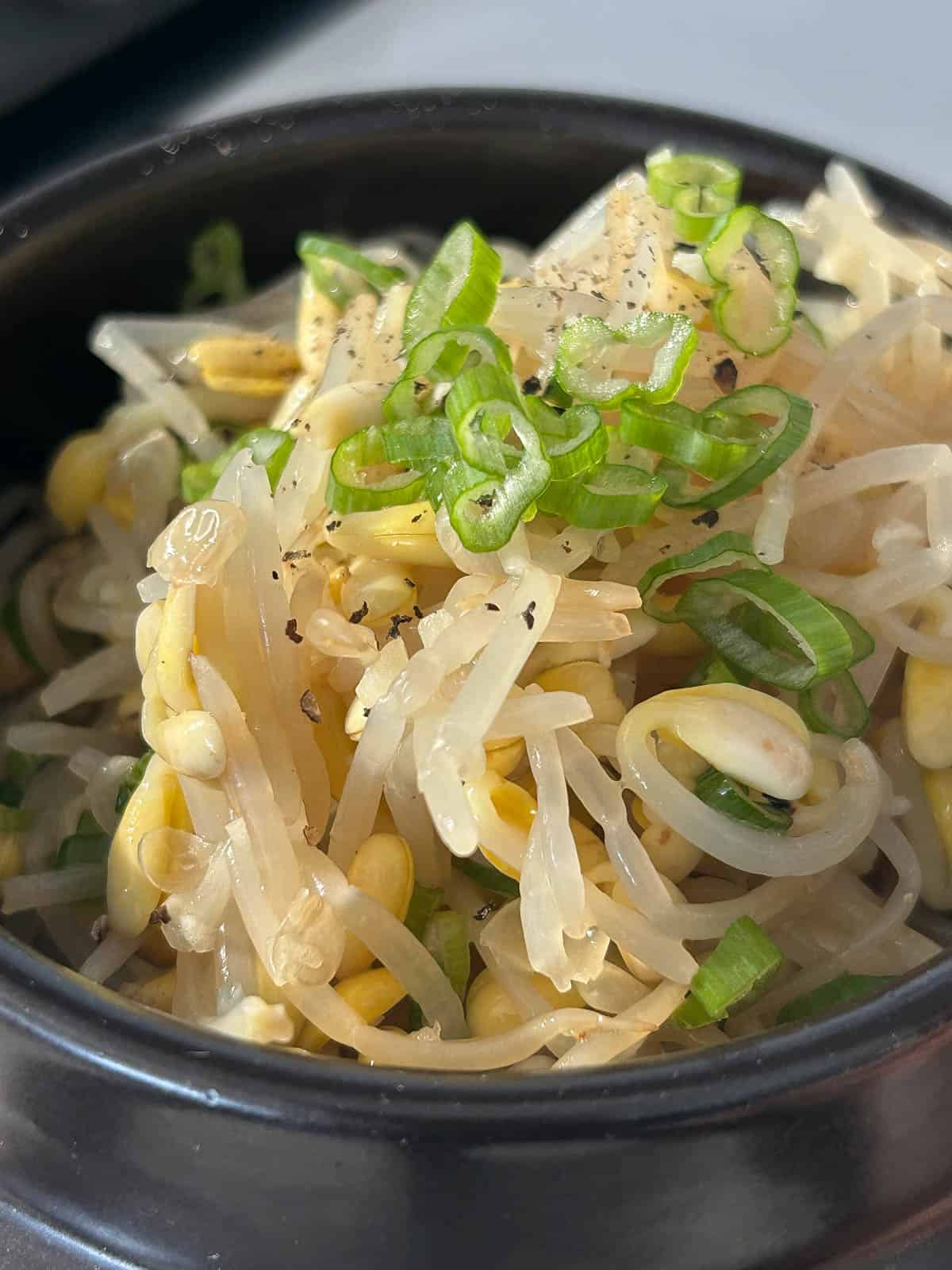
Prepare the soybean sprouts:
- Step 5: Bring a pot of water to a boil. Add soybean sprouts and cook for 3-4 minutes until slightly tender but still crisp. Drain and rinse under cold water.
- Step 6: Transfer to a bowl and toss with sesame oil, salt, minced garlic, scallion greens, and black pepper. Taste and adjust salt if needed. Set aside.
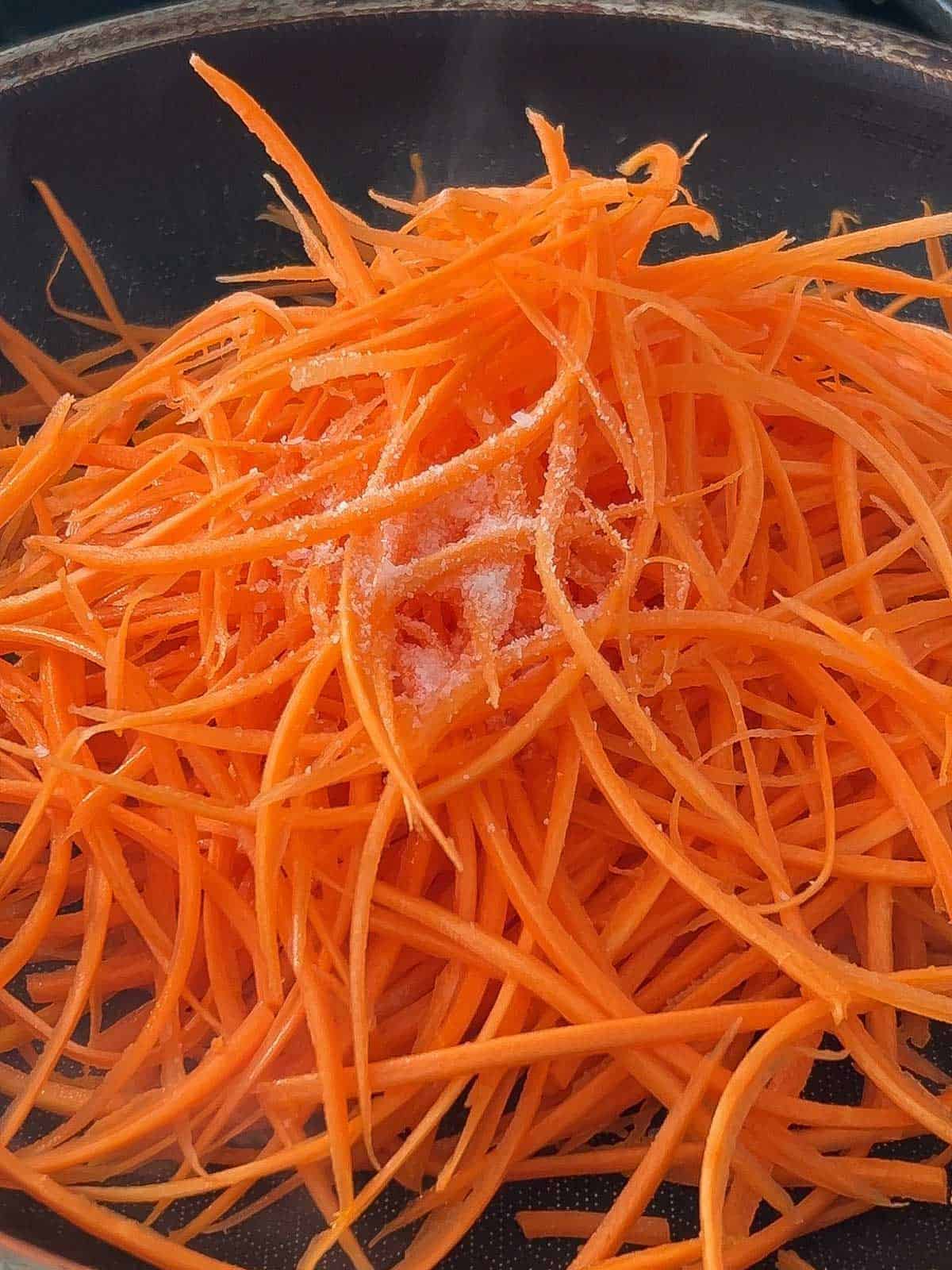
Prepare the carrot:
- Step 7: To a pan, add a little bit of oil, julienned carrot, and salt. Sauté until slightly softened. Remove from heat and set aside.
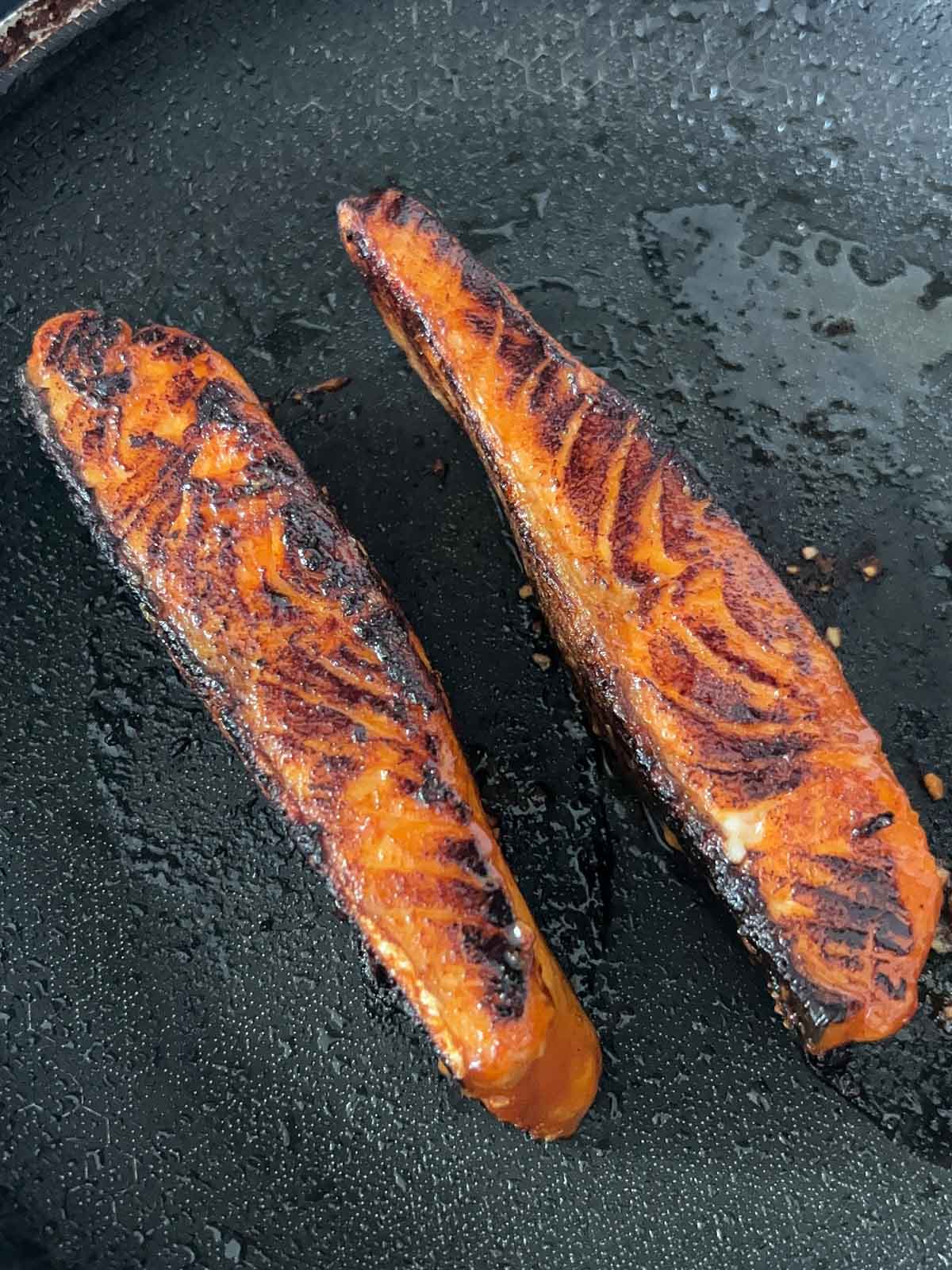
Cook the salmon:
- Step 8: To a pan over medium-low heat, add neutral oil. Pat the salmon skin dry and place the salmon, skin side down in the pan. Cook for 2-3 minutes or until browned. Turn the heat to low and flip and cook on all sides for another 2-3 minutes or until caramelized and the cooked to desired temperature. Pull the salmon at 130F for a medium cook or 140F for well done. If meal prepping this for the week, pull the salmon 1-2 minutes early or 5 degrees before desired cook temperature.
To assemble:
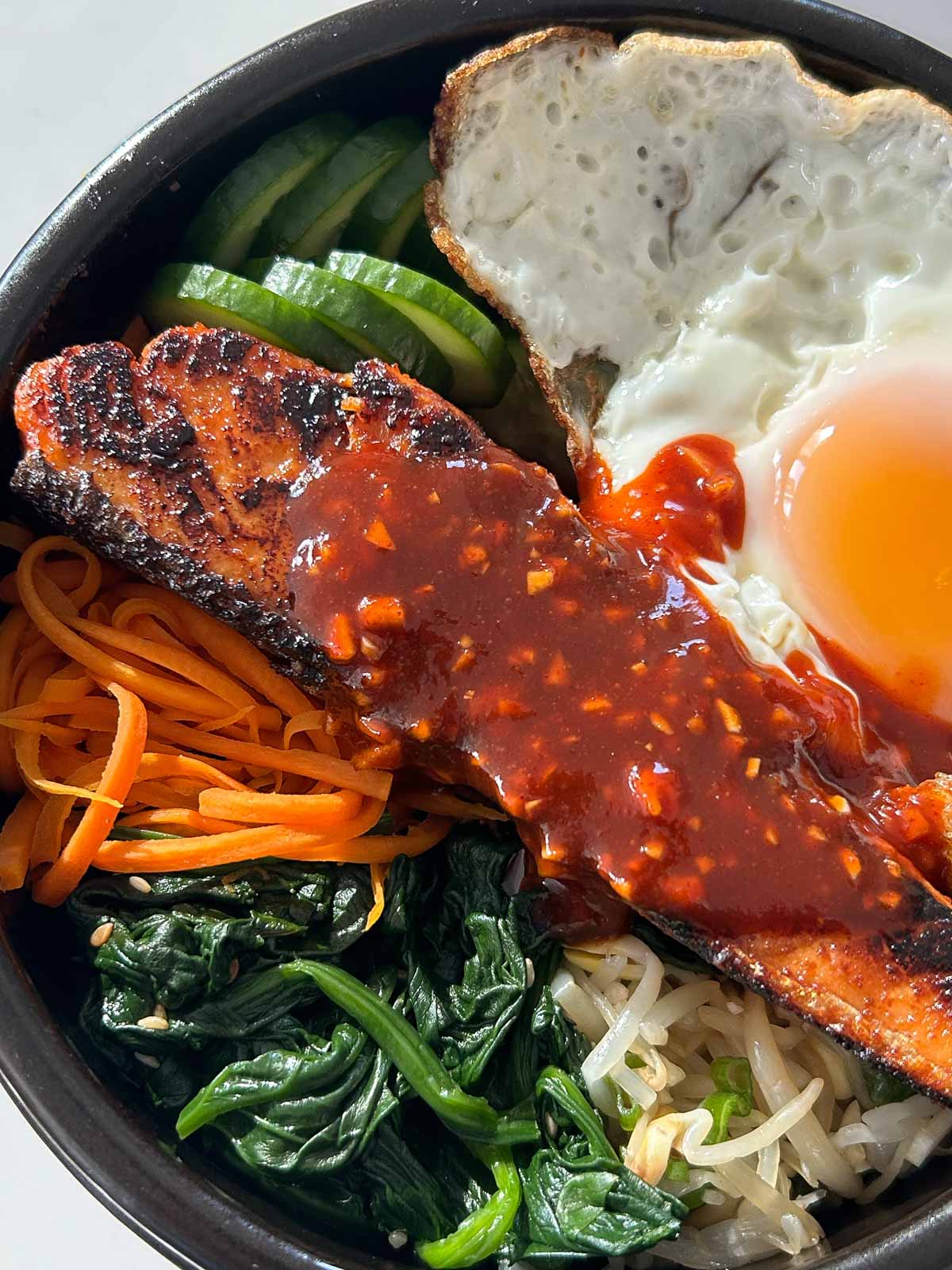
- Step 9: To two bowls add rice, spinach, soybean sprouts, seasoned carrot, and sliced cucumber. Place a salmon portion on top of each bowl and top with a fried egg. Drizzle with reserved gochujang sauce and mix the bowl thoroughly before enjoying.
Top tip
Don't skip the marinating time: start off by marinating the salmon to allow time for the gochujang flavors to penetrate the salmon. The longer the better. Pat down the salmon skin before cooking. This will help reduce any burning from the honey. Cook the salmon on low if you find it is burning too quickly.
Substitutions and Variations
- Protein - Chicken, pork, beef, ground turkey, shrimp and tofu all make great protein swaps for salmon! Canned salmon or tinned fish like tuna, mackerel, and sardines would also make nutritious protein swaps.
- Low carb - Reduce the rice or swap with cauliflower rice for a lower carb alternative.
Storage and Reheating
Store each component separately in an air tight container and reheat in batches in the microwave until warm. For meal prepping, pull the salmon 1-2 minutes early so it doesn't overcook when reheated. Fry a fresh egg each time for the best results.
FAQ
Gochujang is a Korean fermented chili paste made from red chili peppers, glutinous rice, and fermented soybeans. It's spicy, sweet and savory.
Gochujang is located in the shelf stable sauce aisle at most Asian grocery stores and the Asian aisle at non-Asian supermarkets. They are also available on Amazon.
Tinned fish is a great alternative to fresh salmon here. Canned salmon, tuna, sardines, or mackerel would work great!
Dolsot bibimbap is served in a hot stone bowl that creates a crispy rice layer on the bottom. Regular bibimbap is served in a regular bowl without the crispy rice. Both are delicious, but if you want that crispy rice, use a cast iron pan and press the rice into the bottom over medium heat for a few minutes.
Yes! Cook all the components and store them separately in air tight containers. Pull the salmon 1-2 minutes early so it will not be overcooked when you reheat it. The vegetables and salmon keep for 3-4 days in the fridge. Reheat and assemble when ready to eat, but fry a fresh egg each time for the best experience.
Gochujang has a very distinct fermented chili pepper taste, so any substitution will not be quite the same. However, sriracha mixed with a little bit of miso paste and honey can add the sweet kick and umami we're looking for. It is not an exact substitute, but it adds the flavor profiles we're looking for.
Other recipes to try:
- My deconstructed burger bowl
- Easy air fryer lemongrass chicken bowl
- Cozy miso egg drop soup
- Bun cha pork banh mi burger
Gochujang Salmon Bibimbap Bowl
Ingredients
Gochujang sauce and marinade
- 2 4 oz salmon portions
- 4 tablespoon gochujang
- 6 garlic cloves minced
- 2 tablespoon honey
- 2 tablespoon low sodium soy sauce
- 2 teaspoon rice vinegar
Spinach
- 12 oz spinach
- 1 teaspoon sesame oil
- ½ teaspoon salt
- 1 teaspoon toasted sesame seeds
Carrots
- 1 medium carrot shredded
- ½ teaspoon salt
Soybean sprouts
- 12 oz soybean sprouts
- 2 teaspoon sesame oil
- 1 teaspoon salt
- 2 garlic cloves minced
- 2 scallions greens only, sliced
- ⅛ teaspoon black pepper
For serving
- 1 cup Cooked white rice
- 1 cucumber sliced
- Reserved gochujang sauce
- 2 Fried eggs
Instructions
To prepare the salmon:
- In a small bowl, mix together gochujang, minced garlic, honey, soy sauce, and rice vinegar until smooth. Reserve half of the marinade in a separate bowl and set aside for serving.4 tablespoon gochujang, 6 garlic cloves, 2 tablespoon honey, 2 tablespoon low sodium soy sauce, 2 teaspoon rice vinegar
- Place salmon filets in a shallow dish and coat with the remaining marinade. Let sit for 15 minutes while you prepare the vegetables.2 4 oz salmon portions
To prepare the spinach:
- Bring a pot of water to a boil. Add spinach and blanch for 1-2 minutes until just wilted. Drain and rinse under cold water. Squeeze out excess water thoroughly.12 oz spinach
- Transfer to a bowl and toss with sesame oil, salt, and sesame seeds. Set aside.1 teaspoon sesame oil, ½ teaspoon salt, 1 teaspoon toasted sesame seeds
To prepare the soybean sprouts
- Bring a pot of water to a boil. Add soybean sprouts and cook for 3-4 minutes until slightly tender but still crisp. Drain and rinse under cold water.12 oz soybean sprouts
- Transfer to a bowl and toss with sesame oil, salt, minced garlic, scallion greens, and black pepper. Taste and adjust salt if needed. Set aside.2 teaspoon sesame oil, 1 teaspoon salt, 2 garlic cloves, 2 scallions, ⅛ teaspoon black pepper
To prepare the carrot
- To a pan, add a little bit of oil, julienned carrot, and salt. Saute until slightly softened. Remove from heat and set aside.1 medium carrot, ½ teaspoon salt
To cook the salmon
- To a pan over medium-low heat, add neutral oil. Pat the salmon skin dry and place the salmon, skin side down in the pan. Cook for 2-3 minutes or until browned. Turn the heat to low and flip and cook on all sides for another 2-3 minutes or until caramelized and the cooked to desired temperature. Pull the salmon at 130F for a medium cook or 140F for well done. If meal prepping this for the week, pull the salmon 1-2 minutes early or 5 degrees before desired cook temperature.
To assemble
- To two bowls add rice, spinach, soybean sprouts, seasoned carrot, and sliced cucumber. Place a salmon portion on top of each bowl and top with a fried egg. Drizzle with reserved gochujang sauce and mix the bowl thoroughly before enjoying.1 cup Cooked white rice, 1 cucumber, Reserved gochujang sauce, 2 Fried eggs

Leave a Reply